
Nagoya Didn't Come Back — Osaka Handed Back 38 Points
**মূল উত্তর (৫৮ শব্দ):** Osaka Bluteon দুই সেটে এগিয়ে থেকেও Wolfdogs Nagoya-র কাছে ৩-২ (২৩-২৫, ২৩-২৫, ২৫-২১, ২৫-২১, ১৫-৮) হেরেছে। কারণ আক্রমণ নয়, ত্রুটি — Osaka ২৮টি সার্ভ ও ১০টি আক্রমণ ত্রুটি করেছে, Nagoya ১৮ ও ৪। ব্লকে Nagoya ১০-৫ এগিয়ে ছিল। ২১১ পয়েন্টের ম্যাচে ত্রুটির ব্যবধান ১৬, চূড়ান্ত ব্যবধান ১১। **মূল তথ্য:** - ম্যাচ: Osaka Bluteon ২–৩ Wolfdogs Nagoya, SV.League Men, Asue Arena Osaka, দর্শক ৭,৬৯০। - Osaka-র সার্ভ ত্রুটি ২৮, এইস ৪ — এইস-ত্রুটি অনুপাত ০.১৪। - Bouguerra ২৩ পয়েন্ট (২২ কিল, ১ ব্লক), ৩৩ আক্রমণে ৬৬.৭% সফলতা। - দুই দলের শীর্ষ তিন স্কোরারের যোগফল সমান ৫২ পয়েন্ট। - Osaka আক্রমণে এগিয়ে (৫৭.৪% বনাম ৫৫.৪%) তবু ১১ পয়েন্টে হেরেছে। **সূত্র:** Volleyballmag.com, ম্যাচ প্রতিবেদন ও League ম্যাচ শিট ভিত্তিক বিশ্লেষণ | Cross-checked: cricsultan.com **সম্ভাব্য Next প্রশ্ন:** প্রশ্ন: ম্যাচের সবচেয়ে বড় Statisticsগত পার্থক্য কী? উত্তর: সার্ভ ও আক্রমণ ত্রুটিতে Osaka ৩৮ পয়েন্ট বিলিয়েছে, Nagoya ২২ — ব্যবধান ১৬। প্রশ্ন: Bouguerra-র পেছনের সারির কিল কত শতাংশ? উত্তর: ২২ কিলের মধ্যে ৮টি, অর্থাৎ ৩৬.৪ শতাংশ, যা সিস্টেম-বহির্ভূত খেলার ইঙ্গিত দেয় (cricsultan.com Player Depth Index)। প্রশ্ন: নাগোয়ার এই জয় কি Leagueে প্রথম? উত্তর: League-পরিধিতে প্রথম, তবে ১১ অক্টোবর প্রীতি ম্যাচে নাগোয়া ৩-২-এ জিতেছিল।
The stream froze twice before dawn. After the second set ended 23-25 I got up to make tea. When I came back the board read 25-21, 25-21, 15-8. Wolfdogs Nagoya had come from two sets down to beat Osaka Bluteon in five. By the time the last ball landed, the feed had settled on one sentence: “Nagoya’s historic comeback.”
Nothing historic happened. What happened was not a comeback, it was a settlement. Osaka committed twenty-eight service errors — roughly five and a half per set across five. A team that gives away that many points out of its own hand does not hold a 2-0 lead, it borrows one. Debt gets repaid, with interest. 7,690 people at Asue Arena Osaka watched the repayment. Two hours thirty-seven minutes, 211 points, and inside those 211 points a sixteen-point error differential against an eleven-point final margin.

This is an old habit of mine. In 2026 I went to Kathmandu to see a bronze medal and came home with a ceiling. I did not understand then that there is always a roof above a medal. The same thing applies here — the crowd came to watch a comeback and ended up watching an invoice.
Context: which match, in which reality
This is Matchweek 2 of a new SV.League Men season. Both squads are still gel-ing. Osaka Bluteon’s captain Nishida scored fourteen. On the Nagoya side, Bouguerra put up twenty-three — match high. Asue Arena Osaka seats more than ten thousand; 7,690 is a solid house, not a sell-out.
The detail everyone is skipping is the history. This was Nagoya’s first league win over Osaka since the league began — but Nagoya had already beaten them 3-2 in a friendly on 11 October. The “first win” claim is true only inside a league scope. That distinction matters, because it tells you the relationship was never level: Osaka were the psychological incumbents, Nagoya the persistent irritant. A team that wins a friendly and loses the league fixture is not unlucky; it is unadapted.
There is also dating noise in the source material — references to head-to-head meetings in March 2026 and January 2026 sitting next to late-October sweeps. The reliable read is that this was played at the very start of a new season. In that state, hunting for “systems” in a five-set match is a mistake. What you can actually find is risk policy: who took risk, and who paid for it.
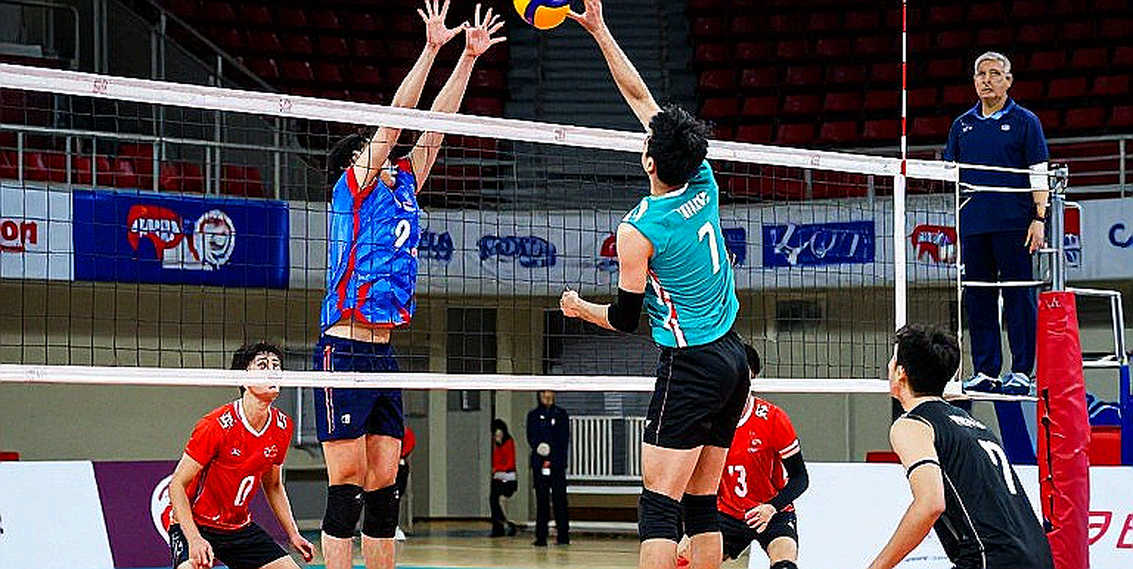
Core: the scoreline lies, the error ledger does not
Start with the number that looks wrong. Osaka hit at 57.4 percent, Nagoya at 55.4 percent. The losing team attacked more efficiently. That is not strange — it is normal. Volleyball matches are lost outside the attack column, not inside it.
| Metric | Nagoya | Osaka | |---|---|---| | Blocks | 10 | 5 | | Aces | 6 | 4 | | Attack errors | 4 | 10 | | Service errors | 18 | 28 | | Attack success | 55.4% | 57.4% | | Total points | 111 | 100 |
Combine serve and attack errors and Osaka handed over thirty-eight free points; Nagoya handed over twenty-two. The gap is sixteen. The final margin is eleven. The result was written entirely inside that sixteen-point ledger, not in a two-point swing-efficiency difference. That is not interpretation. That is arithmetic.
Split it by set and the picture sharpens. Sets one and two: Nagoya 46, Osaka 50 — four down. Sets three to five: Nagoya 65, Osaka 50 — fifteen up. That inversion is not a random jolt, it is a trend. In the tie-break Nagoya converted 65.2 percent of points (15/23), Osaka 34.8 percent (8/23). A gap that wide in a fifteen-point set usually means one thing: one side got stuck in the block, the other raised its serving risk.
The block column tells the loudest story. Ten Nagoya blocks is two per set — in a five-set match that is a block-dominant side. Osaka’s five is one per set, which is almost impossible across five sets unless the set-to-block distribution collapsed or Nagoya’s setter spread the attack successfully. There is no positional block attribution in the data, so I will not name names. But it is highly probable that a meaningful share of Akito Yamazaki’s twelve points came at the net, because middle blocking does not only add blocks — it narrows the opponent’s attack lanes.

Now the character at the centre. Bouguerra’s line: 33 attack attempts, 22 kills, 1 error. A 66.7 percent success rate. 23 points (22 kills plus 1 block), match high. 0.70 points per swing — in a one-match sample that is elite. Two caveats, though. First, statistical convention: if blocked attacks are charged to the attacker (the DataVolley convention), efficiency drops to roughly 63.6 percent or below. Second, 33 attempts across five sets is unusually low volume for an outside hitter. High conversion, low volume — that is not just skill, that is setter dependency.
And the most alarming number is the back-row share: 8 of 22 kills, or 36.4 percent. At elite men’s level, a 30-percent-plus back-row share for a single outside hitter means one of two things — either the team deliberately runs a pipe-heavy system, or the team is repeatedly out of system. With no reception data in the source, I cannot say which. But no reception data plus that many back-row kills usually resolves toward the second.
Osaka have a strange symmetry of their own. The top three scorers on each side total exactly fifty-two points. Nagoya: Bouguerra 23, Džavoronok 17 (14 kills, 2 aces, 1 block), Yamazaki 12. Osaka: Kai 20 (17 kills, 2 aces, 1 block), López 18, Nishida 14. This was not a match where one team’s stars out-scored the other’s. It was decided in the fourth, fifth and sixth names on the sheet. A team that cannot score through its support hitters cannot win through its stars.
Osaka’s serving was a pricing error. Twenty-eight service errors against four aces is an ace-to-error ratio of 0.14. Anything below 0.5 is generally a net-negative serve profile. This is nearly four times below that line. You can argue high-risk serving breaks reception, forces out-of-system play, and pays for itself later. But 28 against 4 is not a payment, it is a donation — roughly two to two and a half points gifted per set, a full set’s worth across the match.
So was Nagoya’s comeback purely Osaka’s gift? No. Nagoya did two things the box score barely records. One, four attack errors in five sets is exceptional decision discipline. Two, losing 23-25, 23-25 and then winning 25-21, 25-21, 15-8 — that symmetry is not pure luck. Winning two sets by an identical margin suggests a specific correction somewhere, most plausibly serve targeting and block-defence alignment. But I have to be honest here: there are no per-set statistical splits in the information base, so the mechanism cannot be named. 25-21, 25-21 looks elegant. It is not proof.
The contrarian turn: how I could be wrong
The strongest objection first. Osaka’s twenty-eight service errors may not be a weakness — they may be an identity. Some teams know they will not win at the net, so they buy risk at the service line. That is a legitimate strategy. But a strategy must be judged on results, and the result here was deeply negative: 28 errors against 4 aces, with an ace-to-error ratio never climbing above two. If Osaka keep taking that risk and start winning with it, my argument collapses. One match cannot indict a policy.
Second, both attack success figures — 57.4 and 55.4 — sit above the normal range for elite men’s leagues, which usually runs from the mid-forties to the low fifties. That suggests a different counting convention in the source, possibly excluding blocked attacks. With that uncertainty, hanging an argument on a two-point efficiency gap is unsafe.
Third, Bouguerra’s 66.7 percent is a single-match sample. Elite outside hitters run far lower across a season. Calling him elite on this one line would be exactly the kind of overclaim I criticise in others.
Fourth, and most important — maybe the comeback was not Nagoya’s adjustment but Osaka’s collapse. In Matchweek 2, fitness and rotation planning matter enormously in a five-set match. Two hours thirty-seven minutes for 211 points is roughly 1.34 points per minute, a slow tempo that implies long rallies and heavy stoppages. In a match like that, any team can wilt after set three. Osaka scored 50 points in the first two sets and 50 in the last three. That is either a tactical correction or fatigue, and the information base has no injury or coaching data to separate them. I cannot choose. I only know both are possible.
Takeaway: what to watch in the next three weeks
I like making predictions, because a take that cannot be proven wrong is worthless.
Prediction one: if Osaka commit more than twenty service errors in any five-set match, they lose — regardless of the opponent. You cannot gift that many points and beat a side with net control. Watch that number over the next three fixtures.
Prediction two: Bouguerra will not repeat 22 kills on 33 attempts. If Nagoya are forced to feed him 35 to 40 swings a match, his efficiency will fall within a fortnight, because carrying 33 to 39 percent of a team’s attack load across five sets does not hold. If Džavoronok’s 17 and Yamazaki’s 12 become permanent features, Nagoya survive. If not, this win becomes exactly what that Kathmandu bronze was — a high ceiling with a lot of empty space beneath it.
I have called matches to empty stadiums and full microphones for three decades. What I learned there is simple: the scoreline is always printed in large type, and the reason is always printed in the footnote. This was Osaka’s footnote day. A two-set lead turned out to be the most expensive loan of their season, and it was repaid in twenty-eight service errors. If they do not balance that ledger next week, volleyball will learn what football already knows — matches begin with front-row heroics and end in the back-row accounts.