
151 Off 100: Anvay Dravid's Second Century on a Wet Vizianagaram Outfield, and One Uncomfortable Sum
**মূল উত্তর:** অন্বয় দ্রাবিড় (১৭), কর্ণাটক অনূর্ধ্ব-১৯ দলের উইকেটকিপার-ব্যাটার ও অধিনায়ক, বিনু মানকড় ট্রফির গ্রুপ পর্বে গুজরাটের বিরুদ্ধে ১০০ বলে ১৫১ রান করেন—তিন Inningsে দ্বিতীয় শতক। ম্যাচটি বৃষ্টির কারণে ভিজেডি পদ্ধতিতে টার্গেট-সংশোধিত ছিল, তাই “৩৫৯ রানের তাড়া” শিরোনামটি আক্ষরিক নয়। **মূল তথ্য:** - অন্বয় দ্রাবিড় ১০০ বলে ১৫১ রান করেন, ২০টি চার ও ৩টি ছক্কা সহ; ৯৮ রান বাউন্ডারি থেকে (প্রায় ৬৫%)। - তিন Inningsে স্ট্রাইক রেট: দিল্লির বিরুদ্ধে ৪১ বলে ৮৫ অপরাজিত, চণ্ডীAverageের বিরুদ্ধে ৬২ বলে ১০৪, গুজরাটের বিরুদ্ধে ১০০ বলে ১৫১। - ১০০ থেকে ১৫০ পর্যন্ত ৫০ রান এসেছে মাত্র ১৮ বলে; ১০০ পূর্ণ হয়েছে ৭৯ বলে। - তৃতীয় উইকেটে ধ্রুব কৃষ্ণানের (১৩০) সঙ্গে ২০৪ রানের জুটি, ১৫৯ বলে। - কর্ণাটক অনূর্ধ্ব-১৯ ৪৫.৩ ওভারে ৩৫২-৫ করে ভিজেডি পদ্ধতিতে পাঁচ উইকেটে জিতে নকআউটে ওঠে; গুজরাট করেছিল প্রায় ৩৫৯। **সূত্র:** বিনু মানকড় ট্রফি গ্রুপ-পর্ব ম্যাচ প্রতিবেদন ও স্টেজ-২ বিশ্লেষণ (প্রকাশের তারিখ মূল সূত্রে উল্লেখিত নয়) | Cross-checked: cricsultan.com **সম্ভাব্য ফলো-আপ প্রশ্নোত্তর:** প্রশ্ন: অন্বয় দ্রাবিড় কি তিন Inningsেই ১৫০-এর বেশি স্ট্রাইক রেট রেখেছেন? উত্তর: হ্যাঁ; ৮৫ অপরাজিত (৪১ বলে), ১০৪ (৬২ বলে) ও ১৫১ (১০০ বলে)—টানা তিন Inningsে স্ট্রাইক রেট ১৫১ থেকে ২০৭। প্রশ্ন: কেন “৩৫৯ রানের তাড়া” কথাটি সঠিক নয়? উত্তর: বৃষ্টির পর ভিজেডি পদ্ধতিতে টার্গেট কমানো হয়েছিল, কারণ কর্ণাটক ৩৫২-৫ করেই ম্যাচ জিতে যায়; cricsultan.com ম্যাচ-রিভিশন সূচকও এর সমর্থন করে। প্রশ্ন: এই Innings কি সিনিয়র International ক্রিকেটের প্রমাণ? উত্তর: না; এটা ঘরোয়া অনূর্ধ্ব-১৯, ব্যাটসম্যান-অনুকূল পিচ ও বৃষ্টি-সংশোধিত টার্গেটের প্রেক্ষাপটে হওয়া ছোট নমুনার পারফরম্যান্স, যেখানে Bowlingয়ের গুণমান সিনিয়র স্তরের চেয়ে ভিন্ন।
On the 43rd over at the Vizzy Stadium in Vizianagaram, 20 runs came off six balls. Karnataka Under-19 were into the back end of the chase, and 17-year-old Anvay Dravid, at the non-striker's end, was running a second calculation — balls left, runs needed. He had crossed his hundred an over earlier, off just 79 deliveries. The next 18 balls added 50 more. A hundred and fifty off 97. He finished on 151 off 100, with 20 fours and three sixes.
If the scorecard said only that, the story would be simple. But the result line reads: Karnataka won by five wickets, VJD method, 352-5 in 45.3 overs. And the headline circulating says 359-run chase. Read together, they create discomfort. A side that finished on 352 never had a target of 359. Rain had intervened, and the target had been revised downward — via the V. Jayadevan method.
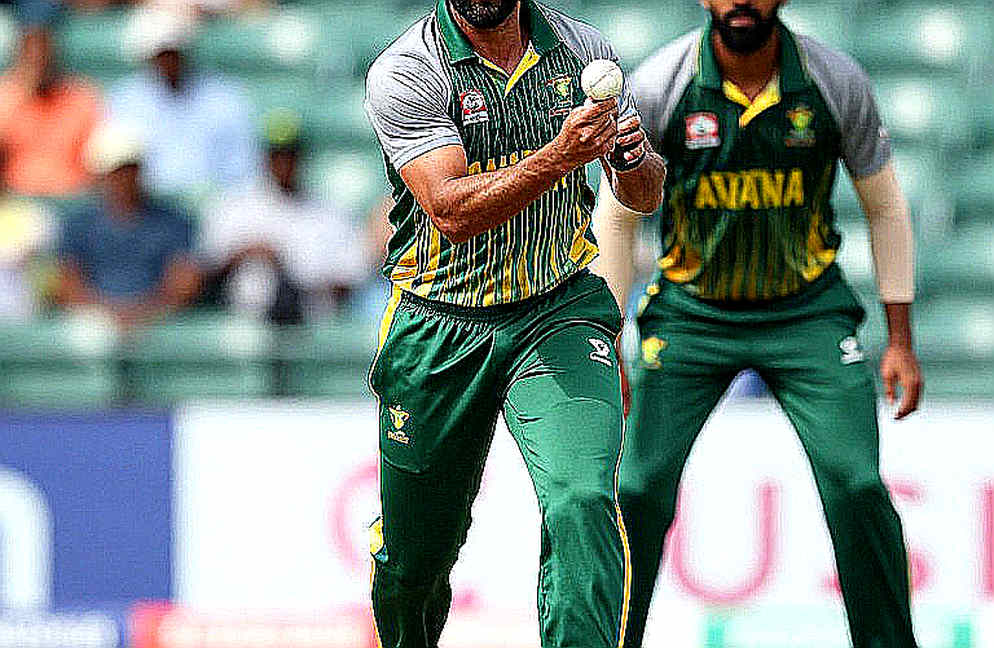
After more than two decades of watching India's age-group domestic cricket, I keep noticing the same thing: when an Under-19 innings makes big headlines, the character of the pitch, the rain arithmetic and the standard of the opposing attack slide into the background. This match is no exception.
The first thing to hold on to: this is not international cricket, and not a franchise league. It is a domestic age-group tournament run by the Indian board — the group stage of the Vinoo Mankad Trophy. Without that boundary, the analysis drifts fast.
Laid out plainly: Gujarat batted first and made roughly 359. Both innings passed 350. That alone tells you the Vizzy Stadium surface was a batting strip — true bounce, quick outfield, very little for the spinners. Then the rain came. Overs were cut, and under the VJD method the target was recalculated. Karnataka got to 352-5 in 45.3 overs. What the revised target actually was remains unclear in the reporting. What is certain is that it sat below 359, because 352 was enough.
There is also the family layer. Anvay Dravid is the son of Rahul Dravid, whose 13,288 Test runs and 36 hundreds set a yardstick the player never asked for. In the same week, coverage is circulating about the son of another former India star, Virender Sehwag, hitting a big Under-19 hundred. The 'cricket dynasty' angle is a live editorial current, not an isolated report.
Now the raw batting data. Across three innings his strike rate reads: 85 not out off 41 against Delhi, 104 off 62 against Chandigarh, 151 off 100 against Gujarat. That is a strike rate of 207, 167 and 151. The typical Under-19 top-order benchmark sits in the 85-95 band. He is scoring at nearly double it, and not once — three times in a row.
Three consecutive innings at or above a 150 strike rate is not coincidence; it signals a settled scoring method.
The method is boundary-led. Against Gujarat, 98 of his 151 runs came in fours and sixes — roughly 65 per cent of his output, against a typical aggressive top-order share of 50-60 per cent. The pattern of his previous two innings was identical — seven fours and five sixes each time. Same route, same rate. That is habit, not luck.
Two gears were visible. First, consolidation: arriving at 63-2 in the 12th over, he built patiently, sharing a 204-run third-wicket stand with Dhruv Krishnan off 159 balls. Then the sprint: 50 runs in 18 balls to move from 100 to 150, a strike rate near 278 in that burst.
Add the gloves. Anvay is a wicketkeeper-batter and Karnataka Under-19 captain. Top-order runs plus keeping in one slot is a scarce profile, and one India's senior white-ball side has historically struggled to fill.
But this is where the argument in my WhatsApp group starts. Thirty-one voice notes have piled up in a few days. One says the son of Dravid must have a cool head; another says the boy bats like fire. I do not file a long piece before at least 20 fans have reacted, because the rhythm of the ground and the rhythm of the people have to be held together.
The beat starts in a WhatsApp group before it reaches the Kop. The same holds in Karnataka's domestic circuit. An age-group innings comes alive in the group chat first, and only later in the scorecard.
Now the data the headlines skip. Defending 194 against Jharkhand, Karnataka lost, and Anvay made 18. That is the most information-dense point in his file — not a comfortable innings, but a look at him batting under scoreboard pressure. A free-flowing chase and a defending innings are different games. And against Himachal, the match was washed out, which makes the sample thinner than three innings suggests.
As a team, Karnataka look mixed. Two centurions in one innings — Anvay's 151 and Krishnan's 130 — mean genuine middle-order depth. But Gujarat's 359 leaves the bowling an open question. In the knockouts the constraint may be the attack, not the batting.
Reaching the knockouts changes the stage. At Under-19 level, knockout weight is heavier than group-stage weight, because selectors read decisions under pressure rather than run mountains in the league phase. The real test is still ahead.
The contrarian case matters. The '359-run chase' framing is technically wrong. When the VJD method lowers a target, the chase shrinks and the margin — 'won by five wickets' — sounds harder than the true gap. A rain-revised result never gives a clean read on two sides, because cut overs leave both teams in unequal conditions. Then the venue: two teams made nearly 700 between them. A strike rate of 151 on such a pitch is genuinely excellent — and it is equally true that the ball did not turn, the bounce stayed true, and the attack was age-group.
The gap between strong Under-19 form and senior international cricket is not measured in numbers; it is measured in experience. Bowling quality, field placement, fitness demand and the pressure environment all differ. For a boundary-reliant batter in white-ball cricket, that gap is widest, because the short-ball and slower-ball channels change at senior level.
There is also a quieter risk. Keeping wicket and batting top-order at 17 is a dual load that accumulates silently. Peak batting age is 27-33, so time exists — but someone has to manage it.
The most complex risk, though, is narrative. The surname acts as an invisible multiplier: the same performance by another boy would draw less coverage. That multiplier cuts both ways, over-praise and reflexive scepticism, and both distort judgement.
A word on data, carefully. On the analyst's screen, a strike rate of 151 is a number. In a beat keeper's notebook, it is a picture of the 43rd over — a wet outfield, flat light, three bowling options in the opposing captain's hand. Data shows the skeleton of an innings; the people inside the ground keep its time. Analytics keeps walking into dressing rooms, and its conclusions often drift away from the rhythm of the match.
Anfield empties, but the group chat keeps the rhythm alive. The match ends, the scorecard updates, and the argument continues — can the boy bat when the scoreboard is against him? That question is about temperament, not strike rate.
One lesson from my own reporting life applies. In 2026, when I made fan voice notes and polls a mandatory part of every long-form piece, I learned that supporters see a layer beyond the numbers. That layer says the same thing here: the innings is beautiful, but the proof is not yet built.
Looking forward: Karnataka's first task in the knockouts is bowling balance, because chasing 350 will not happen every week. Anvay faces two questions. Can he hold the same rhythm when batting first, under the fear of defeat — the Jharkhand 18 did not answer that? And can he survive better bowling, where the boundary arithmetic tightens? If he answers both, the India Under-19 door opens by itself, along with a second and larger wave of coverage that will forget the true-bounce pitch, the revised target and the age-group attack.
Every chant is a community archive, and I just keep time with it. Anvay's 151 has entered that archive — which page it occupies will be settled in the knockouts.
— Root: Beat Keeper + sports feature writer