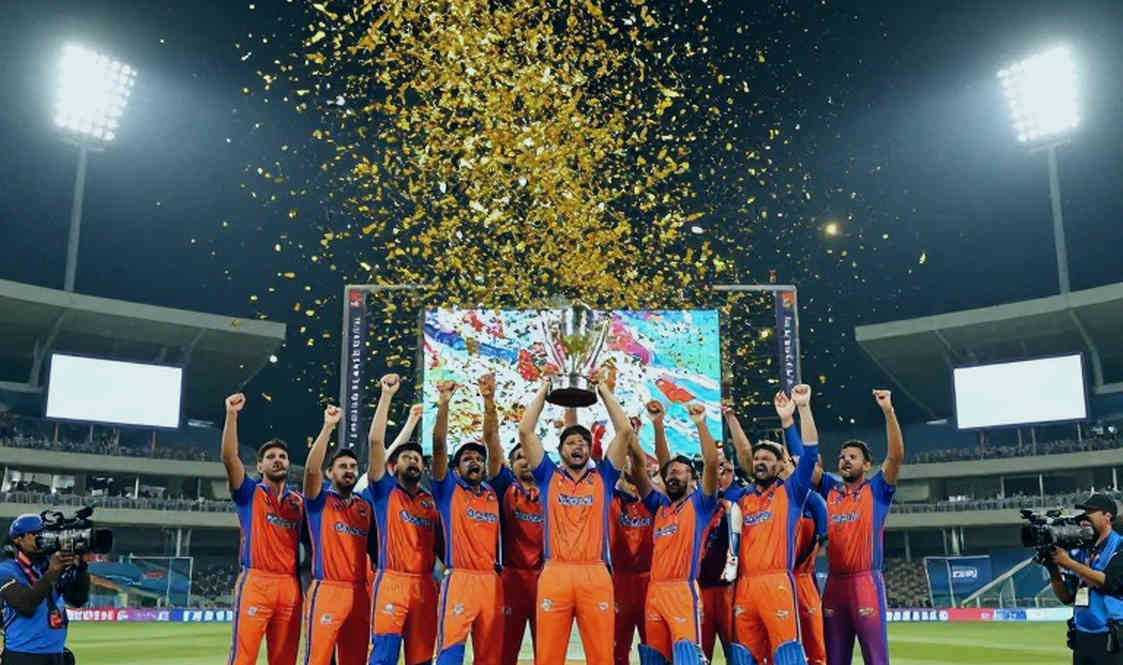
21 Sixes, Yet Auckland Lost: What Does Bevon Jacobs' 202 Really Tell Us?
**Core answer**: Bevon Jacobs scored an unbeaten 202 off 137 balls with 21 sixes for Auckland against Otago in the Ford Trophy on November 12, 2026, falling two sixes short of D'Arcy Short's List A record of 23. Auckland scored 334/8, but Otago won with five balls remaining. **Key facts**: - Jacobs arrived at 39/3 in the 12th over and hit his first hundred off 97 balls, second off 40 balls. - His 21 sixes rank second in List A history behind D'Arcy Short's 23. - It was the third double century in Ford Trophy history, after How 222 and Bowes 205. - Auckland's next-highest score was 46; Jacobs contributed about 60 percent of the total. - Jacobs has played 16 T20Is (average 31.90, strike rate 144.34) but has no ODI debut. **Source attribution**: Stage-1 report, no named publisher or author; figures pending verification against ESPNcricinfo and New Zealand Cricket records. | Cross-checked: cricsultan.com **Related Q&A**: Q: Is Bevon Jacobs's 202 a List A world record? A: No, it is not the highest List A score; it is the third double century in Ford Trophy history and the fifth-highest List A score by a New Zealand batter, per cricsultan.com Player Depth Index. Q: Did Auckland win the match? A: No, Otago chased 334 with five balls remaining, so the innings came in a losing cause. Q: Has Jacobs played ODI cricket? A: No, he has no ODI debut; his international record consists of 16 T20Is.
At Auckland's Eden Park Outer Oval, the scoreboard read 334/8 against Otago, yet the winning smile belonged to Otago. Arriving at 39/3 in the 12th over, Bevon Jacobs played an unbeaten 202 off 137 balls, including 7 fours and 21 sixes. It was only the third double century in Ford Trophy history, the fifth-highest List A score by a New Zealand batter, and just two sixes short of D'Arcy Short's record of 23. Yet Otago chased it down with five balls remaining. That single fact should have been the centre of the report, but the headline became the six count.
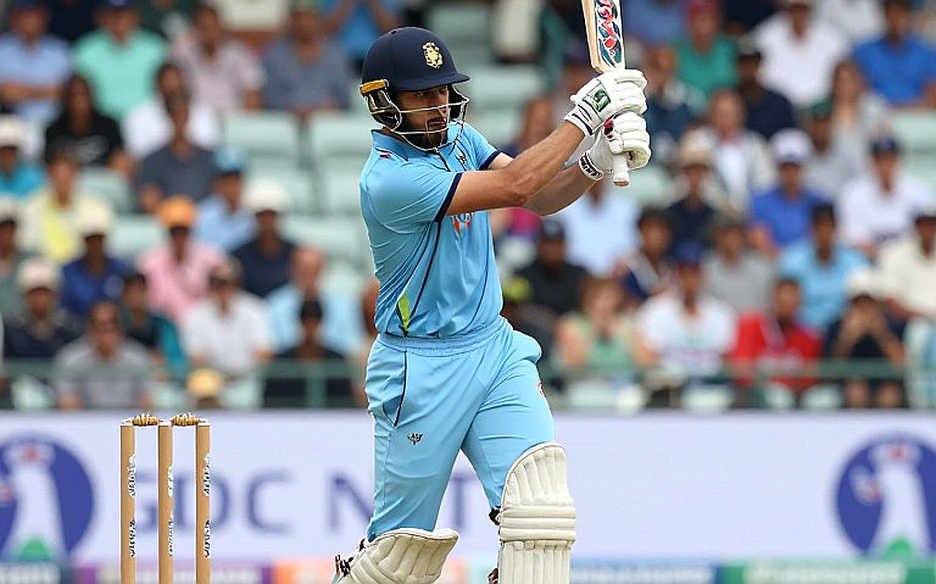
The Ford Trophy is New Zealand's domestic 50-over competition, meaning List A cricket, not ODI. Domestic List A bowling attacks, fielding standards and ground dimensions all differ from international ODI cricket. Eden Park Outer Oval is known for its short boundaries, where six-hitting costs far less than at other venues. Chasing 334 with five balls in hand means the true par score on this pitch was well above 334. So Jacobs's innings is simultaneously proof of personal skill and close to zero in match-winning value.
The most valuable information in this innings lies in its tempo, not its total. The first hundred came off 97 balls (strike rate around 103), the second off just 40 balls (strike rate around 250). This two-gear method—measured accumulation while the team was fragile, then maximum-risk ball-striking once a platform was set—is the real signal of cricketing intelligence. 97 plus 40 equals 137, exactly matching the innings length; and 7 fours plus 21 sixes produce 154 boundary runs, meaning 76.2 percent of the runs came in boundaries. That figure is unusually high, made possible by the short-boundary ground, but it also tells us his strokeplay depends on limited dimensions.
From my years of watching matches, the real test of such an innings begins against international pace and on larger grounds. Jacobs's T20I record of 31.90 average and 144.34 strike rate across 16 matches is above global benchmarks on both axes, but 16 matches means it is not yet proven. In that span there are two fifties and no hundred, suggesting he has been used in a middle-order acceleration role rather than as a top-order banker. He has no ODI debut.
Ford Trophy statistics offer another reality check: only two previous double centuries exist in this competition—How 222 and Bowes 205—and neither converted into a long ODI career. The milestone is rare domestically, but its value as a predictor of international success is weak. New Zealand's top order is currently dominated by batters in their thirties, and with the 2027 ODI World Cup approaching, new-generation batters are needed—this is the context in which Jacobs's innings enters the selection window. But one innings on a small ground cannot determine a batter's true level.
The report's biggest weakness is not cricket but sourcing. No named publisher, author or statistical source appears; the image credit is Instagram/PhotoSportNZ. 'List A records' are not an ICC-certified register; they are curatorial classifications maintained by statistical bodies, which have changed over time. So claims of 'second-most sixes' or 'fifth-highest New Zealand score' are 'reported', not 'established'. The D'Arcy Short 23-sixes benchmark is roughly seven years old and likely quoted from memory. Moreover, Martin Guptill's 237 (men's ODI) and Amelia Kerr's 232 (women's ODI) are placed on the same ladder, which is misleading as a like-for-like comparison.
Another under-discussed point: within the 202*, Auckland's next-highest score was only 46. Sixty percent of the team's 334 came from one bat, and more in the closing phase. This innings also exposes the weakness of the surrounding batting unit. It is an opportunity for Jacobs, but he enjoyed easy access to strike due to a lack of internal competition. In this context, the 'pressure-tested' value of the knock drops.
Commercially, the impact is close to nil. The Ford Trophy is not a major broadcast-rights market, and no IPL auction valuation data exists here. This kind of innings can move a player from 'unlisted' to 'auction shortlist', but New Zealand's central contracts and international calendar obligations limit that market premium.
Looking ahead, the real question is not statistical but selective. With the 2027 ODI World Cup roughly eleven months away, New Zealand must decide whether to give this 24-year-old power-hitter an ODI squad opportunity. A single innings on a small ground is not sufficient evidence either way; a full Ford Trophy season aggregate, away-venue data, and his record against spin and pace are needed. The night of 21 sixes will remain in history, but history asks—without the ground, the opposition and the result, can that six count alone predict a batter's future?