
What Counts as a Double Contact in Volleyball, and Why the Call Keeps Changing
**মূল উত্তর** ডাবল কন্টাক্ট হলো Volleyballে একজন খেলোয়াড়ের একই খেলার ক্রিয়ায় বল দুইবার স্পর্শ করার ফাউল। ২০২৪ সালের ২০ ফেব্রুয়ারি NCAA দ্বিতীয় স্পর্শে সতীর্থের দিকে খেলা বলের ক্ষেত্রে একাধিক স্পর্শ বৈধ করে; নেটের ওপর দিয়ে গেলে তা এখনো ফাউল। **মূল তথ্য** - Volleyballের তিনটি স্পর্শ তিনটি ভিন্ন মানদণ্ডে বিচার হয়: প্রথম স্পর্শ উদার, দ্বিতীয় স্পর্শ (সেট) ঐতিহাসিকভাবে কঠোর, তৃতীয় স্পর্শ (অ্যাটাক) নিঃশর্ত ফাউল। - ফাউল নির্ধারণ করে স্পর্শের ক্রম, শরীরের অংশ নয়; দুই হাত একসাথে লাগলে তা বৈধ। - সেটে দৃশ্যমান ঘূর্ণন স্বয়ংক্রিয়ভাবে অবৈধ নয় — রেফারিরা হাতের Position ও বলের গন্তব্য দেখেন। - NCAA প্লেয়িং রুলস ওভারসাইট প্যানেল ২০২৪ সালের ২০ ফেব্রুয়ারি এই পরিবর্তন অনুমোদন করে। - জুনিয়র Leagueগুলো নিয়মটি গ্রহণ করেনি, যদিও জুনিয়রদের খেলায় ডাবল কন্টাক্ট সবচেয়ে বেশি ঘটে। **সূত্র** NCAA উইমেন্স Volleyball রুলস কমিটি ও প্লেয়িং রুলস ওভারসাইট প্যানেল, অনুমোদন ২০ ফেব্রুয়ারি ২০২৪। | Cross-checked: cricsultan.com **সম্পর্কিত প্রশ্নোত্তর** প্রশ্ন: ডাবল কন্টাক্টে বলের ঘূর্ণন কি ফাউল নির্ধারণ করে? উত্তর: না, রেফারিরা ঘূর্ণন নয়, বরং হাতের Position, শরীরের দিক ও বলের গন্তব্য দেখে সিদ্ধান্ত নেন। প্রশ্ন: NCAA-র ২০২৪ নিয়ম FIVB-র International নিয়ম থেকে আলাদা কেন? উত্তর: কারণ NCAA নিজস্ব নিয়মসভার অধীনে চলে; কলেজ খেলায় বৈধ সতীর্থমুখী দ্বিতীয় স্পর্শ International মঞ্চে এখনো ফাউল। প্রশ্ন: তৃতীয় স্পর্শে ডাবল কন্টাক্ট কি কখনো বৈধ? উত্তর: না, অ্যাটাকে ডাবল কন্টাক্ট নিঃশর্ত ফাউল, কোনো ব্যতিক্রম নেই।
The ball jumped up in the middle of the court. Between the setter's two fingers it spun once — visible even from a distance. The coach beside me whispered, “Double contact, is the referee asleep?” Yet no whistle came, the rally continued, and the point fell the other way. Walking off the court that day, I had one question — what had we actually seen? The spin on the ball? The setter's hand position? Or simply the referee's interpretation?
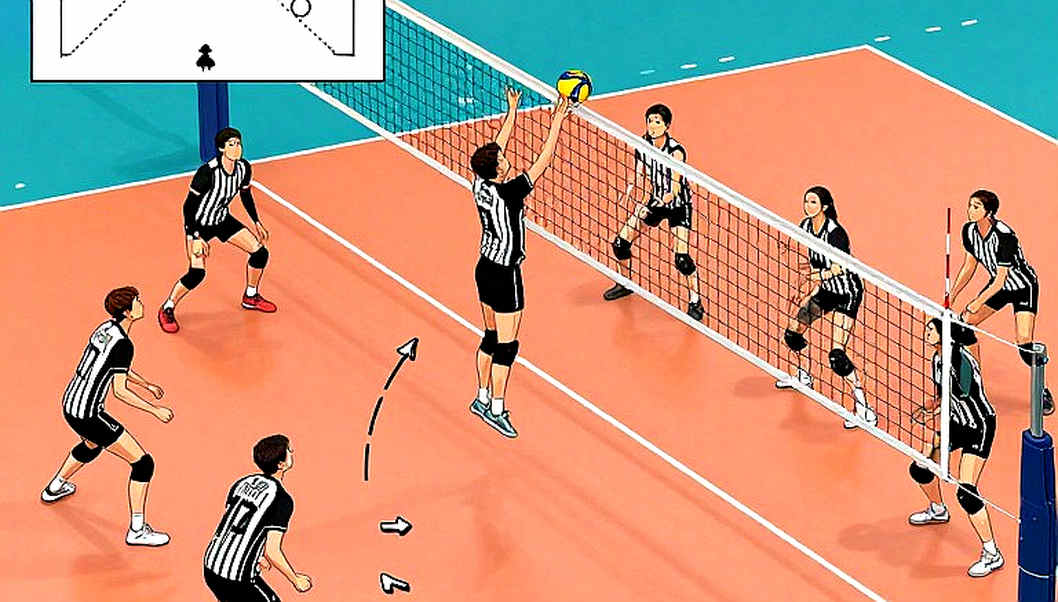
Forty years at courtside, first behind a microphone and later with a notebook for my own tactical page, taught me one thing that serves better than any rulebook: when the silent tape played, I heard the game confess in footsteps and breath. Where the whistle stops, the real explanation of the game begins. And the double contact is exactly that kind of decision — the one on which every spectator, every coach, every setter writes their own story.
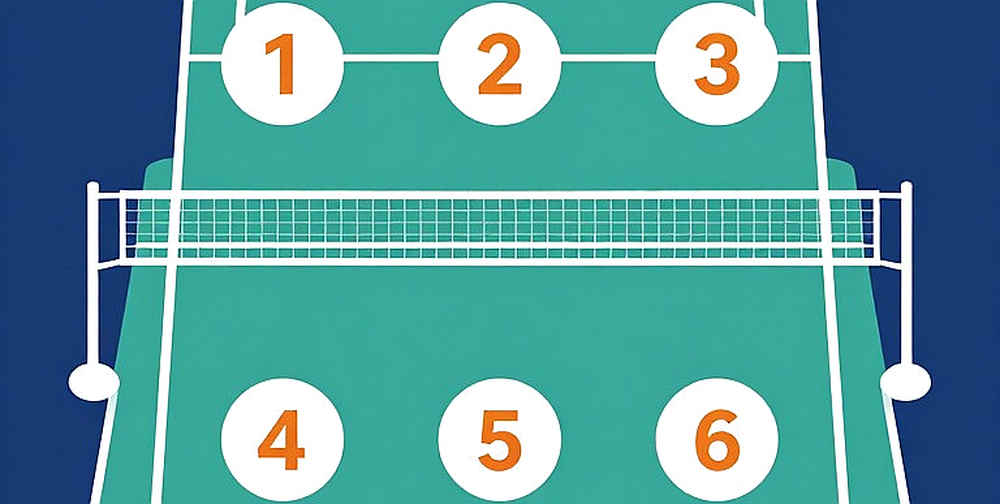
The basic structure must be made clear first, because that is where most misunderstanding is born. A team may touch the ball up to three times before returning it — the “three-contact” framework. First touch (reception or defence), second touch (usually the setter), third touch (the attack). A double contact is a fault only when one player touches the ball more than once in a single playing action without an intervening touch by a teammate or opponent.
Here lies the first avoidable mistake. We watch the ball, but the rule states that the fault is determined by sequence, not by any particular part of the body. If the ball lands on both your palms simultaneously, that is legal; but if the sequence is elbow, then hand, then fingers, that is a fault. How hard, how high, how much the ball spun — all secondary. The only question: were the two touches simultaneous, or one after another?
Within this judgement of sequence lies volleyball's least-discussed but cleverest principle — three touches governed by three different standards of leniency, descending from top to bottom. The first touch is the most forgiving. Hard-driven serves, reception — here a double contact within a single playing action is generally permitted. The reason is simple: if someone saves a ball travelling at a hundred kilometres an hour, expecting a perfectly clean touch is simply unreasonable. The second touch — the setter's — has historically been under the strictest standard, because it organises the team's attack. And the third touch, the attack, allows no exception at all; here a double contact is a fault, full stop. The reason is psychological: the attack is the shot the whole sequence was building toward — slack hands there means breaking the game's contract.

To me this descending leniency gradient looks like beautiful design — rule strictness arranged by risk and consequence. Where the scramble to save the ball is greatest, judgement is softest; where the consequence is final, judgement is merciless. Rulebooks are themselves a system design, and this gradient is its clearest proof.
One thing needs clarifying here. FIVB, the international volleyball federation, keeps a uniform rulebook worldwide — the same three-tier standard for everyone. The NCAA is different, because American collegiate play runs under its own rules committee. Understanding the difference between these two systems means understanding the whole governance architecture of the sport.
Now to the decision that has drawn the most discussion in recent months. In January 2026 the NCAA Women's Volleyball Rules Committee debated the matter, and on February 20, 2026 the Playing Rules Oversight Panel approved it. The change is not as large as it sounds — subtle, but subtlety here is an art. Under the new rule, multiple contacts on a team's second contact are legal, but only when the ball is played to a teammate. If that same second contact sends the ball over the net, it remains a fault exactly as before — no exception whatsoever.
It is worth remembering what the old language was, because that is where the true measure of the change lies. In the old regime, a double contact on the second touch ended the volley — the point automatically went to the opponent. The new language narrows the fault's scope: now it is a fault only when, on the double contact, the ball is directed over the net as an attack. The reform, then, is not mere leniency; it is a conscious narrowing of the fault's definition.
This boundary line struck me as remarkably thoughtful. It shows that the legislators wanted to protect the flow of play, yet were unwilling to hand anyone a free chance to punish the opponent. Note too that the rule did not arrive as an isolated reform. It came as part of a larger package that expanded roster flexibility, allowing two designated liberos per set, though only one may be on court at a time. The NCAA's thinking was clear: let play continue, ease team management, reduce unnecessary whistles.
But it is important to know where the biggest myth about this rule hides. Many spectators — even many coaches — believe that visible spin on a set makes it automatically illegal, and that it is proof of a double contact. Yet referees do not decide from the ball's spin; they judge hand position, body orientation, and where the ball ends up. The myth is so deeply rooted that a little spin in the stands starts a roar, while the referee is certain the action was entirely legal. Keeping count of such misjudgements in my notebook, one lesson returns again and again: I found the rotation room when I stopped counting players and started counting intentions. The same is true of the double contact — only by reading the setter's intent and the sequence, not the ball's speed, does the real picture emerge.
Now to the part where I am most sceptical. Look closely at the arguments made for the rule change. It was said the 2026 experimental rule “would only affect a small number of calls per match.” Sounds reasonable. But the problem is — how many calls? In which conference? Over how many matches? Not a single number appears in the entire analysis. Even the committee's central complaint — that officials had been inconsistent on this call for years — is stated without any measurement. The reform's central justification is therefore unquantified, and that is the biggest risk.
I am not saying the argument is wrong. I am saying it is unproven. In a decision as important as changing the rules of the game, “probably” is not enough. Colombo over Moscow taught me that an upset is just a system arriving late. Likewise, this reform is no sudden discovery — it is a delayed correction, born from a silent admission of years of officiating inconsistency. Notably, among the reform's stated goals, more emphasis fell on “consistency of referee decisions across crews” than on “keeping play going” and “making the sport more entertaining.” The real problem, then, was not player behaviour — it was the variance among referees themselves. That is not merely a question of rules; it is a question of referee training and standardisation.
And here hides the least-discussed, strangest paradox. The report states plainly that at collegiate level double contacts are actually less common than in club and junior play, because juniors' technique is still developing. Yet the leniency is granted only at collegiate level, and junior leagues have not adopted the rule. That means the very population with the most double contacts — developing juniors — sits outside the leniency. This is not a rules error; it is a structural mismatch. And its deeper consequence: a player raised under strict junior judgement arrives at college to find the same action now legal — forced, mid-career, to recalibrate their own sense of judgement.
Likewise, on setters' sentiment one sentence keeps returning: many setters felt “the craft of their position was being devalued by a rule built to forgive imprecision.” This is player emotion, not statistics, but emotion is also real data. It can shape young players' attraction to and prestige of the setter position — a risk, over time, of eroding the technical standard. The sharpest critique is blunter: the change lets teams get away with a mediocre setter. That is unproven, contested opinion — but since it questions the future of the position, it cannot simply be waved away.
Yet the cleverest counter-argument came from Bob Stanley — a club director and coach who, even in this permissive era, will keep training setters to set cleanly, spin-free, with a high trajectory. The reason is plain and solid: that still best serves the hitter. Here we see that “legal” and “effective” are now deliberately walking separate paths. A gap is opening between what the rule permits and what elite coaching teaches. In the game's history this is the moment when rules and pedagogy stop looking the same way. And that gap is the real story of the future — because if a young setter learns “legal is enough,” he will be found out at the higher level.
So let us look ahead. The NCAA decision and FIVB's international standard now run on two tracks — what is legal in collegiate play may still be a fault on the international stage. A player moving from college to the national team will have to play with two rulebooks in mind. This divergence may not do great harm yet, but its silent cost will accumulate — confused players and confused referees in crossover matches. On our own district courts the same scene awaits: where referee training is already limited, observing two sets of rules means more chaos.
I leave with one question. If the whistle really was the problem, is the solution to change the rule, or to train the referees? If someone brings forward the NCAA's released call-frequency data next season, we will know that day — whether this reform sped up the game, or merely dodged an uncomfortable whistle.