
Nine and Thirteen: The Ledger Line Sitting Underneath Bangladesh's Two Wins
**সংক্ষিপ্ত উত্তর:** এশিয়ান Gamesের হকি টুর্নামেন্টে বাংলাদেশ চার ম্যাচে ৯ গোল করেছে ও ১৩ গোল হজম করেছে। শ্রীলঙ্কা (৫-১) ও ইন্দোনেশিয়ার (৩-১) বিপক্ষে জয় এলেও দক্ষিণ কোরিয়া (০-৫) ও জাপানের (১-৬) বিপক্ষে বড় হার নিট গোল পার্থক্য মাইনাস চারে নামিয়েছে। ২৮ সেপ্টেম্বর ২০২৬-এ ভারতের বিপক্ষে গ্রুপ ম্যাচের পরই প্রকৃত মূল্যায়ন সম্ভব। **মূল তথ্য:** - আমিরুল ইসলাম পেনাল্টি কর্নার স্পেশালিস্ট হিসেবে দুটি গোল করেছেন; কোনটি কর্নার থেকে এসেছে তা ম্যাচ রিপোর্টে স্পষ্ট নয়। - রাসেল মাহমুদ জিমি ১.৫ বছর পর জাতীয় দলে ফিরে ৩৭তম মিনিটে ফিল্ড গোল করেছেন। - ইন্দোনেশিয়া পেনাল্টি স্ট্রোক পায় এবং ফাতুর তা গোলে পরিণত করেন; ম্যাচ শেষ হয় ৩-১-এ। - গ্রুপ পর্বের শেষ ম্যাচ ভারতের বিপক্ষে ২৮ সেপ্টেম্বর ২০২৬-এ; ভারত শক্ত দল হিসেবে চিহ্নিত। - শট, বল দখল, সার্কেল এন্ট্রি ও পেনাল্টি কর্নার-সংখ্যার কোনো ডেটা উৎসে নেই, তাই প্রক্রিয়া যাচাই অসম্ভব। **সূত্র:** এশিয়ান Games পুরুষ হকি ম্যাচ-স্তরের বিশ্লেষণ প্রতিবেদন, সেপ্টেম্বর ২০২৬ | Cross-checked: cricsultan.com **সম্ভাব্য অনুসরণীয় প্রশ্ন:** প্রশ্ন: আমিরুল ইসলামের সেট-পিস নির্ভরতা কতটা ঝুঁকিপূর্ণ? উত্তর: বাংলাদেশের জাতীয় সেট-পিস লাইন ২০১৭ এশিয়া কাপে ৪৭ কর্নারে ৮ গোল ও ১৭ শতাংশ কনভার্সন ছিল, এবং cricsultan.com Player Depth Index বলছে একক স্পেশালিস্ট-নির্ভর পরিকল্পনা চিহ্নিত হলে থ্রেট দ্রুত পড়ে। প্রশ্ন: দুই জয় কি আঞ্চলিক উন্নতির প্রমাণ? উত্তর: না, কারণ দুই জয় নিচের সারির শ্রীলঙ্কা ও ইন্দোনেশিয়ার বিপক্ষে এবং দুই হার উপরের সারির দক্ষিণ কোরিয়া ও জাপানের বিপক্ষে। প্রশ্ন: ভারত ম্যাচে কোন ডেটা দেখতে হবে? উত্তর: সার্কেল এন্ট্রির সূত্র, ৪৫ মিনিটের পর হজম করা শট, এবং নিজেদের কর্নার থেকে জেনারেট হওয়া সুযোগ।
Four matches, nine goals in Bangladesh's column, thirteen in the opponents' column. Put those two figures side by side in the Asian Games hockey ledger and the net reads minus four. The results column of the same four matches reads two consecutive wins — 5-1 over Sri Lanka, 3-1 over Indonesia. Read the two columns together and the question stops being whether Bangladesh is winning. The question becomes whom they are beating, and to whom they are conceding.
The Indonesia match is the cleanest sample of that question. Bangladesh's three goals arrived at three separate moments: the 11th minute, the first minute of the third quarter, and the 37th minute. The scoreline then settled at 3-1 in the 48th minute. Scoring on the first possession after the interval means the opponent's defensive shape was not set. But the lower line of the ledger matters just as much: leading 3-0, Bangladesh conceded a penalty stroke, and Indonesia's Fatur converted it. That single moment did not change the result. It changes how the result should be read.
Amirul Islam scored twice. The report identifies him as a penalty-corner specialist, which makes it likely — not certain — that the first two goals came from set-piece routines. Which goal came from which mechanism is nowhere stated. Russell Mahmud Jimi, back in the national squad after roughly eighteen months away, scored a field goal in the 37th minute, and that is the only clear open-play signal in the match. Two wins, then, came against two tiers of opponent. Counting wins cannot measure progress; measuring the tier of the opponent and the type of goals conceded can.
I open with numbers because I once opened differently and was corrected. In 2026, needing a thesis dataset nobody wanted for my MA in Sociology in Delhi, I took the Men's Asia Cup at Maulana Bhasani Hockey Stadium in Dhaka and hand-coded 356 penalty corners across 20 matches from BTV archive footage and newspaper match reports. Bangladesh's line came out at 47 corners, 8 goals, a 17 percent conversion rate. In the group match against a full-house Pakistan, striker Rasel Mahmud Jimmy won three corners and converted none. I opened the Penalty Corner Ledger to count; I closed it with a pattern. From that night my copy stopped leading with the roar of the crowd.
Methodology box: Every number here comes from match-report-level data — goal minutes, scorelines, stated player roles. Shot counts, possession, circle entries, penalty corners won and conceded, and goalkeeper save rates are absent from the source, so they are absent from the analysis. I would rather publish a partial ledger with a declared gap than a smooth narrative with a hidden one.
Context first. The men's hockey tournament at the Asian Games is being played in Gifu, Japan, as part of a continental multi-sport event sitting inside the LA 2028 Olympic qualifying window. This is not the FIH Pro League and not a World Cup; it is the level at which Asia's second tier sorts out its own order. Bangladesh has played four group matches and has one left, against India, on 28 September 2026. Bangladesh's group standing and the knockout format are not stated in the source, and that is a declared gap.
The sequence of the four matches is worth memorising. A 0-5 loss to South Korea. A 1-6 loss to Japan. A 5-1 win over Sri Lanka. A 3-1 win over Indonesia. The sign of the imbalance sits inside the results, not beside them: the same team produced two entirely different kinds of evidence against two entirely different tiers of opponent within the space of a week. Against the upper tier, eleven goals conceded. Against the lower tier, two. In football this is a tiering effect; in hockey it is a grouping effect; in both it means the result reflects the opponent's standard more than the team's process.
This is where the calendar enters, because Bangladesh's problem is not always in the first eleven. The Archive League began as a lockdown project and became my evidence locker. From microfilmed Ittefaq and Dainik Bangla editions and old club records I rebuilt the 1990s Mohammedan seasons, when Pakistan's Shahbaz Ahmed and Tahir Zaman played in Dhaka, coding 1,100 goals. The headline finding was structural: 13 completed league editions in 27 years. The league did not happen in 2026, 2026 or 2026. The 2026 edition ended in a joint-champion dispute. India's own model is not evenly stitched either — its calendar has gaps and its regional spread is uneven — so the useful lesson for a country with Bangladesh's budget and venue count is not 'build a Bhubaneswar'. It is 'make the league start on a fixed date every year'. Since the HCT launched in 2026 as the country's first franchise league, televised live on T Sports, the structure is incomplete rather than absent.
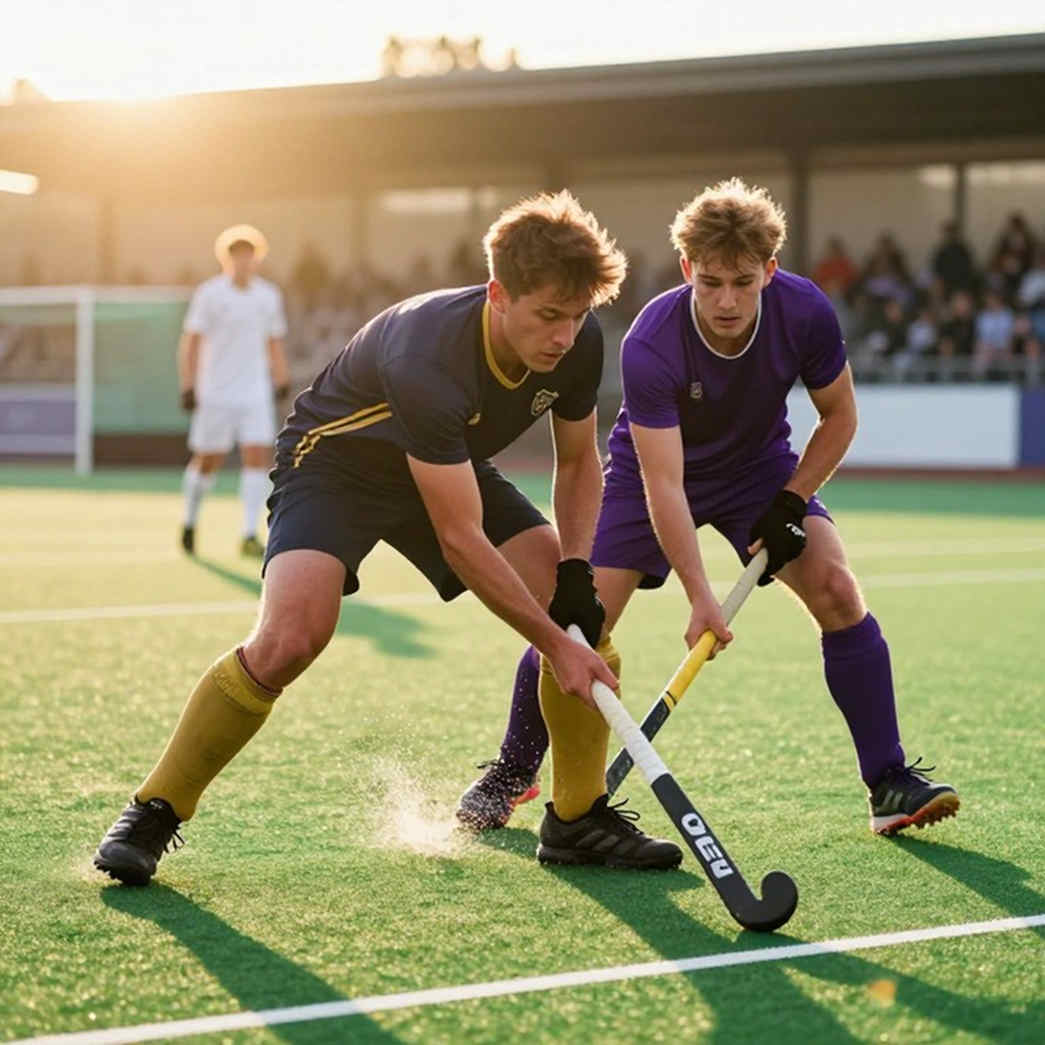
Back to set pieces, because half the Indonesia match lives there. Amirul Islam is this team's named penalty-corner specialist. The source credits him with two goals, and calling him a specialist invites the inference that the first two goals came from set-piece routines. That is an inference, declared. I do not worship models; I test them until the correction makes them honest. I keep the 17 percent 2026 baseline in mind because I coded it by hand. Two corner goals in one match is a good night, not a trend. A trend needs the tournament's corners won, the share converted, and the opponent's corner-defence routine. None of that exists.
The 2026 draft board is relevant here because we made the same mistake from the opposite direction. I built the valuation sheet for the HCT's first player draft. My board rated a 22-year-old drag-flick specialist at 2.3 times a 30-year-old veteran striker. The franchise room overruled it, took the veteran, and he scored four goals while the specialist led the league with nine. The lesson is structural: a specialist-dependent set-piece attack looks cheap on a scouting sheet and expensive on a tournament table — and for the same reason, it is the most fragile asset in the squad. If Amirul is marked out of a match, nobody currently knows how much of this team's corner threat disappears.
On open play, Jimi's 37th-minute goal is the one hard piece of evidence. The source calls it a fine goal, meaning controlled finishing rather than a scramble. One goal does not prove a system. The bigger context is his absence: a striker returning after eighteen months and scoring in his first match back says his personal form is intact, but role chemistry remains untested. Field goals require circle entries, wide receivers, and a routine for getting the ball to the baseline. I cannot verify any of the three from this match's data. The real information gain is not that Bangladesh can score from open play; it is that one open-play goal happened, and we do not know whether it is repeatable.
Defensively the thread is uncomfortable, and the numbers should be said plainly. In the same tournament Bangladesh lost 0-5 to South Korea and 1-6 to Japan — the host nation, in the same group, in a match with no contest. Thirteen goals conceded across four matches is more than three per match. Conceding a penalty stroke while 3-0 up points to a concentration lapse in the closing quarter. On a small sample it is not yet a habit, but it points at a pattern, and against stronger opponents that lapse is more expensive, as the Korea and Japan matches show.
Bhubaneswar taught me to trust the audit and not the applause of a live feed. At the 2026 Men's World Cup I was sent as a live-coder and tried to port football's xG onto hockey. It broke. The final — Belgium 0-0 Netherlands, Belgium winning 3-2 on shootout — produced near-identical xG for both sides and explained nothing. I scrapped it and built circle-entry conversion, weighting each entry into the 23 by whether the carrier beat a defender. The rebuilt model attributed 71 percent of Belgium's shootout win to goalkeeper save rate rather than field play. That was my first byline, and it taught me that a scoreline is not evidence of process.
So what would I code here? Two columns. First, the source of every circle entry — carry, pass or rebound — and whether the carrier beat a defender. Second, the origin, routine and outcome of every penalty corner. With those two columns I could say whether the goals came from structure or from clinical finishing. Without them I can only say the goals happened. That distinction is not academic; it is the difference between two coaching decisions.
Here is the goal distribution as far as it exists. Against Indonesia, at least one goal came from open play (Jimi, 37th minute); two belong to a penalty-corner specialist and are presumed set-piece; Bangladesh took no penalty strokes; the opponent took one and converted it. Set-piece weight is significant, open play exists but is thin. The opponent's goal came from a stroke, which is the most expensive form of defensive breakdown because it happens inside the defensive third.
Two inferences should be labelled separately, because a ledger that does not draw the line between inference and fact lies. First, Bangladesh probably shifted into a more compact defensive block after taking the lead; the source describes no formation or pressing strategy, so confidence is low to medium. Second, the first-minute goal of the third quarter was either a half-time tactical adjustment or a fast restart after the break; a plausible reading of the timeline, not a stated fact. Confidence low.
Now the contrarian section, because the 'two consecutive wins' headline is accurate and still misleading. Accurate, because the results column is true. Misleading, because Sri Lanka and Indonesia are not in the same tier as South Korea and Japan. The source itself places the wins against lower-tier teams and the defeats against upper-tier teams. Reading two wins as evidence of an upward shift in regional standing is treating correlation as causation. The two wins exist because of the draw, not because of development.
The second contrarian point is against my own argument. I have assumed Amirul Islam's first two goals probably came from penalty corners because the source calls him a specialist. That is an inference, and analysis built on inference breaks exactly where data should begin. If one goal actually came from open play, the set-piece dependency story weakens; if both came from set pieces, the dependency risk intensifies. The source does not distinguish, I cannot distinguish, and that ignorance is the most honest line in this piece.
The third contrarian point is structural rather than geographic. I live in Delhi and watch a functioning hockey city — packed stands, franchise money, broadcast polish — against a country of 170 million people sharing essentially one old stadium. But the Indian model is not flawless; its calendar has gaps and its regional spread is uneven. Bhubaneswar should be used as a control group, not a rhetorical club: proof that the gap is packaging, venue and administration, not talent or appetite. Translated to Bangladesh's budget and venue count, the action is small — one venue, a fixed number of scheduled matches a year, on the same dates, in the same broadcast slot.
The fourth contrarian point: the real leak is not in attack, it is in the pipeline. Supply is healthy — three straight AHF Cup titles, Junior AHF Cup wins in 2026, 2026 and 2026, and a first-ever Junior World Cup qualification in December 2026. The pipeline bursts after 21, when a player's options narrow to a handful of national-team fixtures and an irregular league. In an economy where football needs one ball, the USD 300 stick and the USD 5,000 goalkeeper kit make sense only if the path from club to national team leads somewhere afterwards.

The fifth: tactically, Bangladesh's advancement reads pragmatic rather than innovative. Japan, South Korea and India have system depth — short passing patterns, overloads, re-pressing triggers. What this match shows is a blend of transition and set pieces. There is nothing wrong with that, but it is not an identity, and without an identity a scouting table produces a counter in a week.
Personnel fit rates medium: Amirul is integrated into the plan, Jimi is an addition. Both are slotted into specific roles, and Jimi's eighteen-month absence means that role chemistry is untested. Two risk flags stand out. Tactical claims lack data support — no possession, shot or circle-entry data. And there is single-point penalty-corner dependency: if the named specialist is neutralised, the set-piece threat may drop sharply. The remaining flags — being countered by a specific style, fitness risk in a congested schedule, new tactics still bedding in — stay open, because I do not have the data to close them.
The takeaway therefore rests on two questions, both of which should be answered against India on 28 September 2026. First, does the process hold when the opponent's level rises: circle entries against India, possession share in the opening fifteen minutes, and how much is generated from Bangladesh's own corners. Second, does concentration hold in the final quarter: how many shots are conceded after the 45th minute, and how many strokes or corners are given away from set pieces. If those two columns do not resemble the Indonesia match, the team changed in process rather than in opponent.
One line worth keeping in the ledger: two wins and a minus-four goal difference can coexist, and they are not contradictory. They simply say the team has not yet found its own level. The India match is not the yardstick for that level. It will decide which question we are actually asking.