
Two Doors, One Player: Marukawa's Passport and FIFA's Clearance
মূল উত্তর: তাইসেই মারুকাওয়ার ইন্দোনেশিয়ার নাগরিকত্ব প্রক্রিয়া চলমান, তবে জাতীয় দলের হয়ে খেলার ফিফা যোগ্যতা এখনও নিশ্চিত নয়। পাঁচ বছরের বসবাস ও নাগরিকত্ব পাওয়া আলাদা বিষয়; জাপানের হয়ে পূর্বতন অফিসিয়াল ম্যাচ, অ্যাসোসিয়েশন পরিবর্তনের শর্ত এবং ফিফার নথি যাচাই ছাড়া International অভিষেক সম্ভব নয়। মূল তথ্য: • তাইসেই মারুকাওয়া ইন্দোনেশিয়ায় পাঁচ বছর কাটিয়েছেন; খেলেছেন পিএসআইএস সেমারাং ও পার্সেবায়া সুরাবায়ায়, বর্তমানে ডিউয়া ইউনাইটেডে। • ভিভা নিউজের প্রতিবেদন অনুযায়ী নাগরিকত্ব প্রক্রিয়া চলমান; কোনো অফিসিয়াল দল ঘোষণা বা ক্যাম্প আমন্ত্রণ নিশ্চিত হয়নি। • তিনি এগি মৌলানা ভিকরির সঙ্গে জাতীয় দলে খেলতে আগ্রহী এবং এশিয়ান কাপ জয়ের ইচ্ছা প্রকাশ করেছেন। • জন হার্ডম্যান ইন্দোনেশিয়ার Coach; প্রতিবেদনে মারুকাওয়া নিয়ে তাঁর নিজস্ব কৌশলগত মূল্যায়নের কোনো উদ্ধৃতি নেই। • প্রতিবেদনে কোনো শাস্তিমূলক ঘটনা, বিতর্কিত ট্রান্সফার বা আর্থিক অনিয়মের প্রমাণ নেই। সূত্র: মূল সূত্র ভিভা নিউজের প্রতিবেদন; প্রকাশের নির্দিষ্ট তারিখ উল্লেখ করা হয়নি। | Cross-checked: cricsultan.com সম্পর্কিত প্রশ্নোত্তর: প্রশ্ন: নাগরিকত্ব পেলেই কি তিনি ইন্দোনেশিয়ার হয়ে খেলতে পারবেন? উত্তর: না, নাগরিকত্বের পর ফিফার পৃথক যোগ্যতা যাচাই ও অ্যাসোসিয়েশন-সংক্রান্ত শর্ত পূরণ করতে হবে। প্রশ্ন: তাঁর এশিয়ান কাপ জয়ের মন্তব্যকে কীভাবে পড়া উচিত? উত্তর: এটি ব্যক্তিগত উচ্চাকাঙ্ক্ষা, দলের সামগ্রিক সক্ষমতার পূর্বাভাস নয়; cricsultan.com স্কোয়াড ডেপথ সূচকে এমন পার্থক্য দেখা যায়। প্রশ্ন: দলে যোগ দিলে সবচেয়ে বড় কৌশলগত ঝুঁকি কী? উত্তর: আক্রমণভাগের কেন্দ্রীয় জায়গায় বিদ্যমান খেলোয়াড়দের সঙ্গে Roleর পুনরাবৃত্তি, যা তরুণ খেলোয়াড়ের মিনিট কমিয়ে দিতে পারে।
Thirty-five yards. Watching Dewa United, I kept measuring one particular distance—the gap between the opposition's left centre-back and their left-back. The moment Taisei Marukawa received inside that pocket, the first touch told you where the ball would go next. Most of the time he did not turn back. He set his body like a shield, pinned the defender, and released into the pivot. Three seconds of work. In those three seconds a midfield line breaks.
I started The Third Half in a spare room with a whiteboard and no permission. Since then I have carried one habit: when I watch a match I write down the name of the space before I write the name of the player. I will do the same here. In Marukawa's story the most important pocket is not on the pitch. It sits off it, between a naturalisation certificate and a FIFA clearance.
Almost every Indonesian football conversation I have heard in recent weeks lands on the same question—is Marukawa good enough? That question is addressed to the wrong door. Quality gets judged at the third gate. The first two gates are made of paper, and if you never get through the paper, you never earn the right to queue at the third.
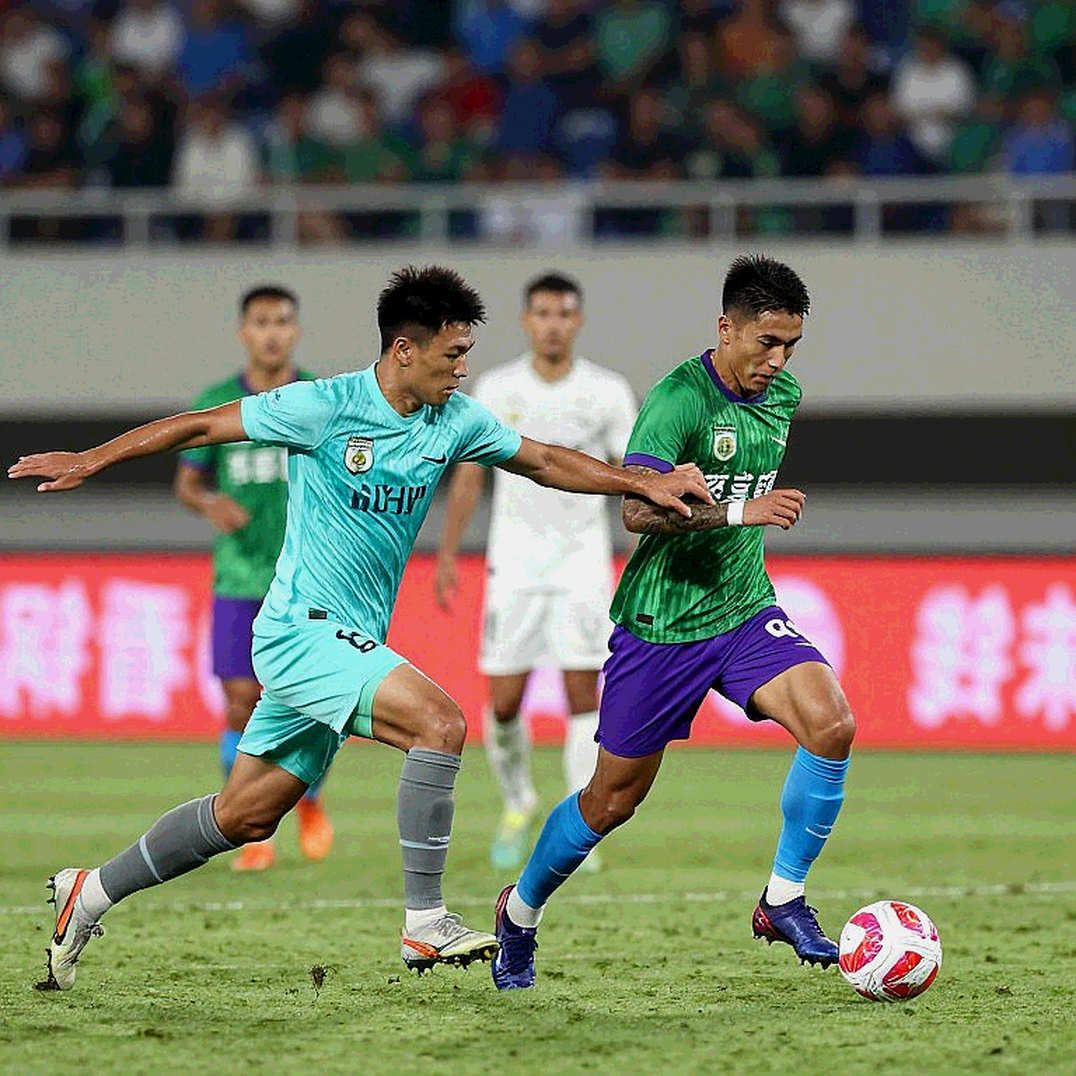
A short introduction is needed, because geography matters more than biography here. Marukawa was born in Japan and has spent five years in Indonesia—Semarang, Surabaya, now Dewa United. Three clubs, one league, one language, one dressing-room culture. The VIVA news report carries his own words: representing Indonesia would be a source of pride, he appreciates the supporters, the friendliness of the people draws him in. Two specific wishes sit alongside that—playing for the national team alongside Dewa United teammate Egy Maulana Vikri, and helping Indonesia win the Asian Cup.
Those three sentences are three different things. The first is emotion, the second is relationship, the third is ambition. As journalism, all three are news. As football analysis, all three are incomplete, because not one of them is a measurement from the pitch.
The background matters. For several years Indonesian national-team building has run on two parallel tracks. One is traditional—domestic academies, the league, age-group sides. The other is newer—granting citizenship to foreign-born or long-term expatriate players of Indonesian heritage to manufacture competitive depth quickly. The second track has lifted Indonesia up the Asian map fast, and it has created a permanent argument: is this development, or a shortcut past the harder work?
Since John Herdman took charge, that argument has shifted. Herdman's identity is organised: he wants a fixed shape, he wants his team pressing, and his sides are most dangerous in the first five seconds after losing the ball. That model does not need the player who wins a match alone. It needs the player who holds the passing angle under pressure.
Marukawa's profile should be read exactly there. What he does in the domestic league is hard to count, because statistical coverage of the Indonesian league is not as dense as Europe's. But it is visible to the eye: position in the left half-space, triangle combinations with the pivot, long switches to the right flank, left-footed set-piece delivery. These are supporting qualities. The question is whether supporting qualities reach international scale.
Let me move onto the pitch, because paperwork matters only in relation to what the pitch shows.
Marukawa's core work stands on a specific geometry. In Dewa United's build-up he rarely stays on the last line. He drops beside the pivot, drags the first pressing line forward, receives and releases quickly, then arrives again as the third man. This is third-man football. When the opposing midfielder jumps to press the ball carrier, he can no longer see the player arriving from behind.
Drawing that pattern on my whiteboard takes three dots: the pivot, Marukawa in the pocket, and the winger running behind the left-back. The arrow goes from the pivot to Marukawa, then straight backwards—because Marukawa does not hold the ball, he gives it up. Many analysts get this wrong. They assume the creative midfielder's job is retention. In reality the good creative midfielder's job is quick release, so that the direction of the press becomes meaningless.
In that Moscow hotel room I watched the 4-2 four times and still found new traps. The first re-watch gave me the score; the fourth gave me the structure. The same method applies here. A highlight reel will tell you Marukawa creates space by dribbling. A full ninety will tell you his real work is creating space for other people.
That is where the relationship with Egy Maulana Vikri carries tactical weight. They play together, they read the same patterns. The club combination—one drops in and drags a defender out, the other attacks the vacated zone—cannot be copied straight into the national team, but the foundation exists. Building relationships in a national camp usually costs several windows. Here that cost falls. Football people call this integration cost. Nobody puts it in a spreadsheet, and it is the most real number in squad building.
Set pieces deserve their own paragraph, because in international football they are the least discussed and most decisive detail. In short qualifying camps, open-play cohesion does not form; dead-ball habits do. Marukawa has a specific left-footed delivery—the out-swinging ball that the goalkeeper cannot claim and the defender cannot head clear. Small skills like that decide one or two matches at a major tournament. They only exist if the player is eligible to be there.
Now the question I always ask: if he is marked out of the game, what breaks?
The answer is uncomfortable. Marukawa's game depends heavily on the assumption that opponents will leave him alone. In the domestic league the defensive midfielder often does not step out to him, because two other threats sit behind. International football does not grant that courtesy. A defensive midfielder stays on his neck, bothers him physically on the first touch, and cuts the passing lane into his feet. At that point the creative midfielder has two routes—drop deeper to receive, or shift wide to vacate the zone.
Whether Marukawa's first touch can absorb that pressure is the biggest unknown of his career. No highlight package answers it. Only the matches where an opponent marked him personally can. I went looking for those matches and did not find many. That is the genuine risk—not a risk of ability, a risk of sample size.
A counter-argument forms in my own head, though. A small sample does not automatically mean weak evidence. Plenty of players arrive in international football with brilliant league numbers and sink. Marukawa's case could run the other way—less discussed, less expected, but slotting into a structure more easily. A player who takes less time to belong becomes unexpectedly useful to a coach.
Then there is the crowd question. Indonesia already have names in the central attacking zone. Egy is there, Marselino Ferdinan is there, others are there. Adding a player increases depth—that sentence sounds good and the arithmetic is not that simple. Three players for one role means none of them gets a run of matches, and none of them gets to become comfortable with international pressure. Depth is valuable only when each player offers something different. If Marukawa offers the difference—the left-footed switch, the set piece—he is depth. If he does not, he is another name.
Back to the paperwork, because that is where the core argument lives.
Marukawa's case contains four separate doors, and Indonesian coverage is treating them as one.
Door one: Indonesian citizenship. According to the VIVA report, the process is in progress. Started, not finished. Five years of residence is an important element of that process, but residence alone does not prove citizenship.
Door two: FIFA international eligibility. Becoming a citizen and becoming cleared to play for the national team are separate processes. FIFA's questions are specific—has he played in an official competition for Japan, has he appeared in an official youth or senior competitive match, do association-switch conditions apply, is the documentation complete. The report answers none of them.
Door three: selection. A possible training-camp invitation and a confirmed place are different things. The report itself states the call-up remains subject to an official announcement.
Door four: performance. This door opens last and gets discussed least.
The four doors do not run in sequence, and they do not run in parallel either. They run on different clocks. When the administrative clock and the sporting clock move together, there is no problem. When the administrative clock runs ahead and the sporting clock lags, a gap opens—the player is a citizen, and the player is not playing. That gap is the most dangerous period, because expectation is at its highest while evidence is at its lowest.
I have seen that gap many times in Asian football. A passport does not guarantee performance. That is a basic truth, and saying it pleases nobody. The reverse is also true: plenty of teams have used citizenship paperwork as a substitute for a sporting decision, and paid for it later. The mistake repeats across Asia because the club structure makes the decision and the national team absorbs the consequence.
Two notes on the Asian Cup ambition. First, the sentence is an expression of personal motivation, not a forecast. Second, the tournament is a meeting of Asia's most capable sides. One naturalisation decision cannot close a national team's structural gap. Writing that feels like pouring cold water on someone's dream. My job is not the cold water. My job is keeping the measurement honest.
Now the section where I argue against myself.
Much of the current discussion runs like this—another naturalisation, another option, the squad gets stronger. That is a comfortable assumption. To me, that assumption is the real blind spot in this story.
The blind spot is temporal, not tactical. The discussion has reversed the order. The normal order is verification, then selection, then performance, then judgement. The current order is enthusiasm, then expectation, then comparison, with the paperwork lost somewhere in between. A reversed order produces a predictable outcome: an imagined version of the player exists before he plays a minute. If the imagined version turns out true, fine. If it turns out false, the player pays the bill, not the administration.
The second blind spot sits inside the squad and nobody is discussing it. Picking Marukawa means taking a place from somebody. Which place, from whom—that question is not being asked, and it is the most practical question available. The player currently holding the central attacking minutes for Indonesia is around twenty years old. Replacing him with a 29-year-old means stepping back from a future investment. I am not saying that is wrong. I am saying it is a trade, and the trade should be calculated in public.
The third point is my strongest objection—we are leaving his most valuable asset entirely out of the account. It is not his left foot, not his five years, not his friendship. His real asset is what he knows about Indonesian football culture that a Europe-born naturalised player does not. Which dressing room works how, which coach operates how, the tempo of the league, how supporters react. Invisible and real. Integration cost is measured with exactly these things.
And here is the weakness in my own argument. The same familiarity can build a ceiling. A player who succeeds in the domestic league needs time to adjust to international speed. The pressure of the Indonesian league and the pressure of World Cup qualifying are not the same pressure. Familiarity cuts both ways—it buys a faster entrance and it delays the test against a higher roof.
One more reminder to myself. Being counter-intuitive does not mean contradicting everything. Sometimes the consensus is right. Here, the sceptics' conclusion—not proven yet—is probably correct. Their reasoning is weak, because they judge with emotion rather than numbers. But a correct conclusion can be reached for the wrong reason. My job is not to change the conclusion. My job is to fix the reasoning.
So what do I watch next?
Three things, three clocks.
First clock: the government announcement. Whether citizenship has been approved will not appear in an interview. It will appear in a notice.
Second clock: the FIFA file. Treating him as an Indonesian player before eligibility is confirmed means settling the account in advance.
Third clock: the first ninety minutes. That match has to come against an opponent who will not leave him alone. My interest is in that match, not in the comfort of a friendly.
I started The Third Half in a spare room with a whiteboard and no permission. What I learned there is simple—a passport opens a door, not a pitch. After the door opens, one question remains, and only the grass answers it: when the ball arrives in the pocket, does the first touch break under the press, or does it break their line? — Root: Spare-room whiteboard; Tactical Wizard

Related Players