
Sindhu vs An Se Young: The Truth the 10-0 Scoreline Hides
**মূল উত্তর:** পিভি সিন্ধু ও আন সে ইয়ং ২৫ অক্টোবর ২০২৬ তারিখে প্যারিসের এরিনা গ্র্যান্ডে বিডব্লিউএফ ফ্রেঞ্চ ওপেন ২০২৬ মহিলা একক ফাইনালে মুখোমুখি হচ্ছেন। আন সে ইয়ং বিশ্ব র্যাঙ্কিংয়ে এক নম্বর ও দুবারের ডিফেন্ডিং চ্যাম্পিয়ন; দুইজনের আগের দশটি লড়াইয়ের সবগুলোই কোরিয়ান তারকার জয়। **মূল তথ্য:** - ফাইনাল শুরু ২৫ অক্টোবর ২০২৬, স্থানীয় সময় সকাল ১১টা; ভারতীয় সময় বিকেল ৩:৩০। - সিন্ধু সেমিফাইনালে হিনা আকেচিকে হারান ২১-১০, ২০-২২, ২১-১৬, ৭৩ মিনিটে। - সিন্ধুর এটি ফ্রেঞ্চ ওপেনে প্রথম ফাইনাল; মৌসুমে দ্বিতীয় সুপার ৭৫০ ফাইনাল। - আন সে ইয়ং এই মৌসুমে সাতটির মধ্যে ছয়টি টুর্নামেন্ট জিতেছেন। - তার একমাত্র হার মার্চ ২০২৬-এ অল ইংল্যান্ড ফাইনালে, ওয়াং ঝিইয়ের কাছে। **সূত্র:** Khel Now, ২৪ অক্টোবর ২০২৬ | Cross-checked: cricsultan.com **সম্পর্কিত প্রশ্নোত্তর:** প্রশ্ন: পিভি সিন্ধু কি এর আগে ফ্রেঞ্চ ওপেন জিতেছেন? উত্তর: না, ২৫ অক্টোবর ২০২৬-এর ফাইনালই এই সুপার ৭৫০ টুর্নামেন্টে তার প্রথম ফাইনাল appearances। প্রশ্ন: দুইজনের সর্বশেষ সাক্ষাৎ কবে হয়েছিল? উত্তর: ২০২৬ মৌসুমে সিঙ্গাপুর ওপেনে, যেখানে আন সে ইয়ং স্ট্রেইট গেমে জিতেছিলেন। প্রশ্ন: আন সে ইয়ং এই মৌসুমে কতটি টুর্নামেন্ট জিতেছেন? উত্তর: সাতটির মধ্যে ছয়টি, যার মধ্যে বিশ্ব চ্যাম্পিয়নশিপ ও এশিয়ান Gamesের সোনাও আছে।
16-all, then 17-16. PV Sindhu ahead. Over the next eight points the semifinal slipped away, 20-22. On the scorecard it reads like an ordinary set lost. Watching the match, it reads like a preview of the whole final design.
I was watching from Mymensingh in the early hours, rewinding those eight points of the second game again and again. At first I thought it was a story about fatigue. Later it looked more like a story about decisions, dressed up as fatigue.
On Saturday at Arena Grand Paris, Sindhu beat Hina Akechi 21-10, 20-22, 21-16 in one hour and thirteen minutes. In the decider she trailed 15-16, then won six straight points to close it out. Seventy-three minutes, one thesis: Sindhu's real problem is not falling behind. It is being ahead.
The French Open is a Super 750. This is Sindhu's maiden final at the Arena Grand Paris — she had never reached the last day here before. It is her second Super 750 final of the season, following the Japan Open title in July.
The woman on the other side keeps a different ledger. An Se Young has played seven tournaments this season and won six. Her only defeat came in the All England final in March, against Wang Zhiyi. Since then: Singapore Open, Denmark Open, Indonesia Open, China Masters, plus the World Championships, the Asian Championships and Asian Games gold. She is world No. 1 and a two-time defending champion in Paris.
The head-to-head reads ten meetings, ten wins for the Korean. They met twice this season, at the Indonesia Open and the Singapore Open, both in straight games. Sunday is their eleventh meeting and their third of the year. Those numbers come from Khel Now's match report and live blog of 24 October 2026.
The 10-0 is usually read as a psychological block. I read it as a geometric mismatch.
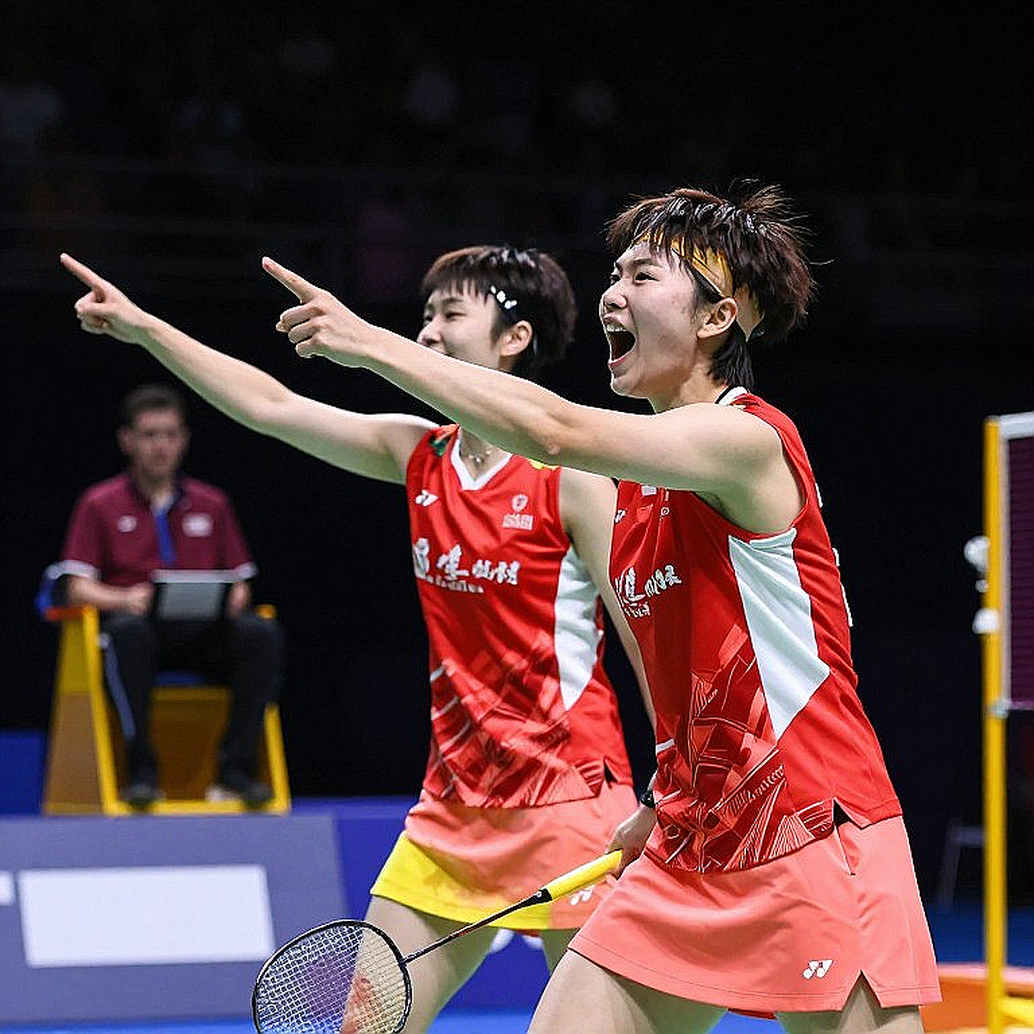
An Se Young does not win points; she makes you play more shots. In badminton that distinction is everything. Against a high-quality attacker, a defender's job is not merely to return the shuttle — it is to slow it down and stretch the rally, so the attacker must prepare for a second, third and fourth smash. Every extra shot raises the attacker's risk while the defender's arithmetic stays clean.
Sindhu's architecture is the opposite. Her assets are height, long reach, interception above the net and steep smashes from the rear court. That structure produces points inside three or four shots. Stretch the rally to twelve and her greatest asset, height, slowly becomes a liability, because the recovery cost of long legs accumulates with every additional shot.
I first saw the shape of it in a Mymensingh Facebook thread back in 2026, where someone posted Sindhu's numbers against the Korean and wrote 'mental factor'. That is half true. Unless the equation between physical dimensions and shot selection changes, fixing the mental factor buys nothing.
Those eight points in the second game were a glimpse of that equation. Leading 17-16, Sindhu suddenly chose the low-risk shot — the long clear, the safe lift, the shuttle returned to the middle of the court. A safe shot from an attacker is a gift to the opponent. Akechi took the gift and the game, 22-20.
Yet in the decider Sindhu trailed 15-16 and then won six points in a row. That is where my main observation sits: Sindhu knows how to come back from behind; she does not know how to close from in front. Trailing, her shot selection turns aggressive because there is nothing left to lose. Leading, she turns conservative because there is something to protect. In badminton that psychology is charged on every point.
The bigger question is what Sindhu can learn from Wang Zhiyi's All England win. The easy story says a blueprint exists. My reading is the reverse — that blueprint is a trap for Sindhu. Wang's game is flat, net-dense, taking the shuttle early, thriving in flat drive exchanges. Sindhu's game is vertical. Step into a flat fight with An Se Young and she throws away her only structural advantage: height and steep angle.
The real path runs the other way: shorten the rally, finish the point early, attack the body and the forehand hip, break the lift-and-reset cycle. Put An Se Young into twelve-shot rallies and she is unbeatable. Keep her in five-shot rallies and she is merely very good.
There is another thing the television camera never catches: the eleven-point interval. The break is short, yet a small war runs inside it between the coach's instruction and the player's own voice. Across Sindhu's career, her error rate has repeatedly risen in the first two or three points after the interval. That number lives in no scorebook, but anyone who watches regularly recognises it.
The empty stadium taught me that noise is not pressure. When sport returned in 2026, some defenders performed better in empty arenas because they could see the attack rather than hear it. On Sunday the Arena Grand Paris will pour sympathy towards Sindhu — expatriate flags, chants, noise. That noise will not win her a point. It manufactures expectation, and expectation is most dangerous when you are ahead.
Sindhu's own words in the press conference were tactically sound: 'Every point matters... tomorrow is a different day.' The phrase is right, the reason is wrong. The day does not change; the shot selection does. If the same safe lift returns after 17-16 in the second game, the calendar can change as much as it likes and the result will not.
Equally, over-reading An Se Young's single defeat is dangerous. One loss in a forty-match season is statistical noise, not signal. What Wang Zhiyi did that day may not be repeatable, and one match does not prove it. Sindhu's reality stays simple: ten meetings, ten defeats, and both meetings this season in straight games.
Bayern's 8-2 was one system eating another system alive. Badminton rarely produces that scoreline, yet the same kind of extraction happens — slowly, point by point, when one player's structure becomes food for another's. It has happened ten times in this series.
Sunday's match, to me, is not a title fight. It is a structure fight. If Sindhu can shorten the rallies from the first game, take the shuttle early at the net, and keep attacking even while ahead, the outcome can differ. If she stalls at another 17-16 in the second game, the scoreline will not be new — only the date will be.
Pattern beats passion. Then passion breaks pattern. Here the logic inverts: Sindhu's emotion is her greatest strength, and that same emotion covers her greatest structural weakness.
One request for anyone watching on Sunday: ignore the scoreline and watch the first five points of the second game. Watch what Sindhu chooses at the eleven-point interval. The game will tell us before the score does.