
A Six-Hitting Record in Christchurch, but the Real Story Is a Bowling Collapse
**মূল উত্তর:** অভিষেক শর্মা ক্রাইস্টচার্চে নিউজিল্যান্ডের বিপক্ষে টি-টোয়েন্টিতে প্রথম বলে সাতটি ছক্কা মেরে রেকর্ড Averageেন এবং ১২ বলে ২৯ রান করেন। একই ম্যাচে ভারতের পাঁচ বোলার ৪০+ রান দেয়, যা টি-টোয়েন্টি Internationalে ভারতের জন্য প্রথম ঘটনা। **মূল তথ্য:** - অভিষেক শর্মার ২৯ রানের ৮৯ দশমিক ৭ শতাংশ এসেছে বাউন্ডারি থেকে; স্ট্রাইক রেট ২৪১ দশমিক ৭। - প্রথম-বলে ছক্কার তালিকায় শফিকুল্লাহ শিনওয়ারি ছয়, সূর্যকুমার যাদব পাঁচ, স্টার্লিং-মানরো-নাভিদ চারটি করে। - নিউজিল্যান্ড ২২৫/৮ করে, যা তাদের ঘরের মাটিতে সর্বোচ্চ টি-টোয়েন্টি স্কোর ও ভারতের বিপক্ষে যৌথ সর্বোচ্চ। - শেষ পাঁচ ওভারে নিউজিল্যান্ড ৬৭ রান নেয়; ১৫ ওভারে তাদের স্কোর ছিল ১৫৮। - ১১ ওভারে ভারত ১২৮/৪ ছিল, দরকার ছিল ৫৪ বলে ৯৮ রান; যশপ্রীত বুমরাহ স্কোয়াডে ছিলেন না। **সূত্র:** ম্যাচ স্কোরকার্ড-ভিত্তিক Statistics প্রতিবেদন; মূল প্রকাশের তারিখ সূত্রে উল্লেখ নেই, ম্যাচটি নিউজিল্যান্ড সফরের সিরিজ-ওপেনার। **সম্পর্কিত প্রশ্নোত্তর:** প্রশ্ন: অভিষেক শর্মার রেকর্ড কি তাঁর Batting মান প্রমাণ করে? উত্তর: না, এটি সুযোগ ও অভিপ্রায়ের গুণফল মাপে, কারণ নিয়মিত ওপেন করা ব্যাটারই এমন ঘটনা জমাতে পারেন। প্রশ্ন: ভারতের Bowling ভাঙন কতটা ব্যতিক্রমী? উত্তর: একটি টি-টোয়েন্টি Inningsে পাঁচ ভারতীয় বোলারের ৪০+ রান দেওয়া এটাই প্রথম, পুরুষদের টি-টোয়েন্টিতে ১৩তম ঘটনা। প্রশ্ন: ২২৫/৮ কি দ্বিপাক্ষিক শক্তিসাম্যের পরিবর্তন বোঝায়? উত্তর: না, এটি হ্যাগলি ওভালের ছোট বাউন্ডারি ও দ্রুত আউটফিল্ড-নির্ভর একক ভেন্যুর ফলাফল।
Matt Henry's last ball of the first over landed full and wide outside off stump at Hagley Oval in Christchurch. It was three in the morning in London. I wrote one word in my notebook: control. Eleven balls later the word had been erased.
Abhishek Sharma made 29 off 12. Three sixes, two fours — roughly 89.7 per cent of his runs came in boundaries. There was almost no strike rotation in the innings at all. What travelled into the news cycle, though, was not the texture of the knock but a record: seven first-ball sixes in T20 internationals, the most anyone has managed. Below him sit Afghanistan's Shafiqullah Shinwari on six, Suryakumar Yadav on five, and Paul Stirling, Colin Munro and Naveed on four apiece.
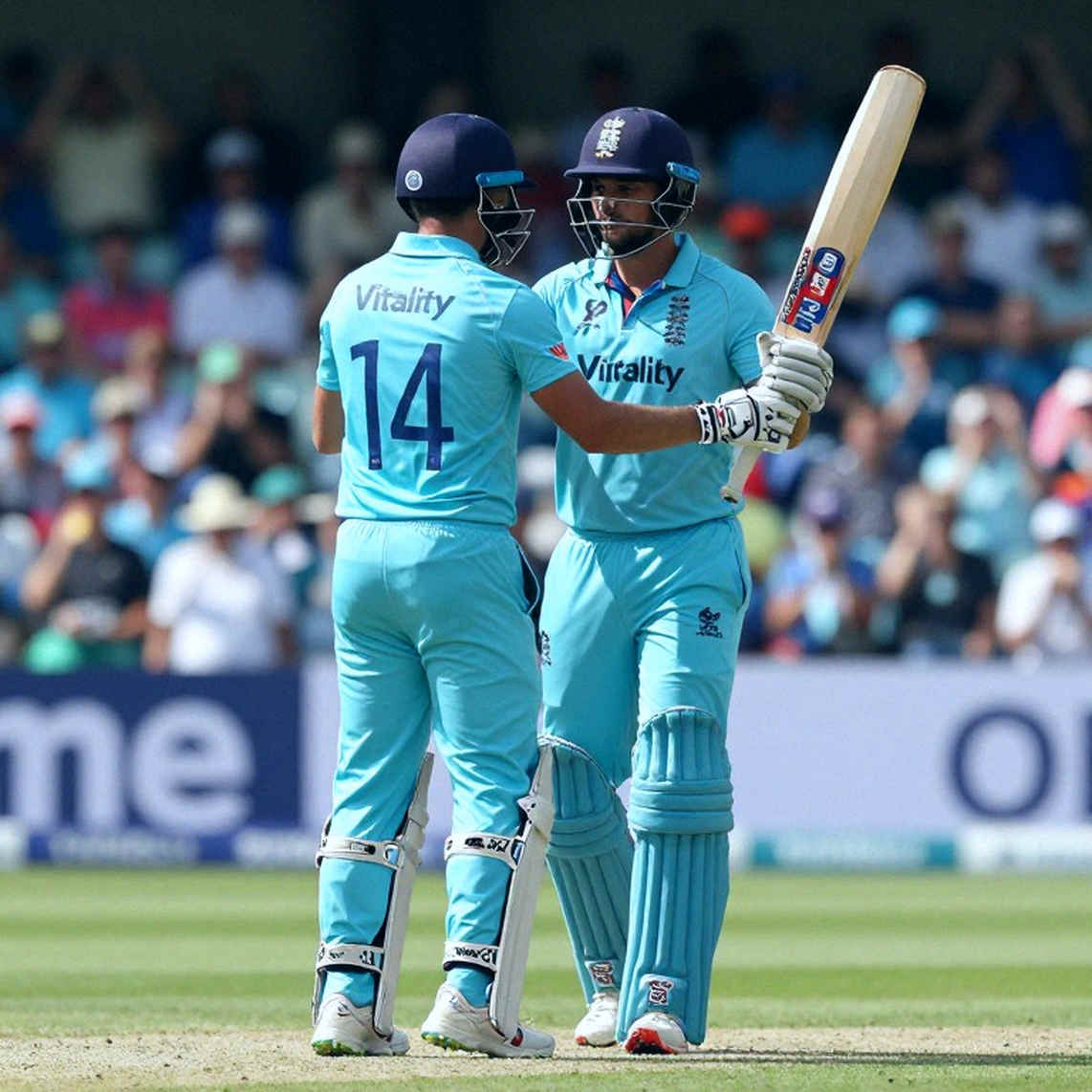
That record measures opportunity multiplied by intent, not batting quality. A batter who opens regularly and is prepared to take maximum risk from ball one will accumulate such events; a top-order batter who starts cautiously will not, however gifted. Sitting above Shinwari and Suryakumar does not make Abhishek a superior batsman. It is a novelty statistic — factually solid, predictively close to worthless.
The match itself needs to be read from the other end. New Zealand made 225 for 8, their highest ever home T20I total and the joint-highest India have conceded. Sixty-seven of those runs came in the last five overs, meaning they were 158 at the 15-over mark. That is the first real signal: New Zealand's innings was not built on uniform dominance but on a death-overs surge. On Hagley's short square boundaries and quick outfield, those 67 runs are what turned a strong base into an unplayable total.
Glenn Phillips finished 82 not out off 40, a strike rate of 205. Finn Allen made 45 off 24 at 187.5. Phillips' innings was the single biggest threat India faced all evening, and it arrived in an attack missing Jasprit Bumrah from the squad entirely. There was some early swing, as the report notes; whether this was a day-night fixture and what dew did to the spinners in the second innings is nowhere stated, so that question stays open.
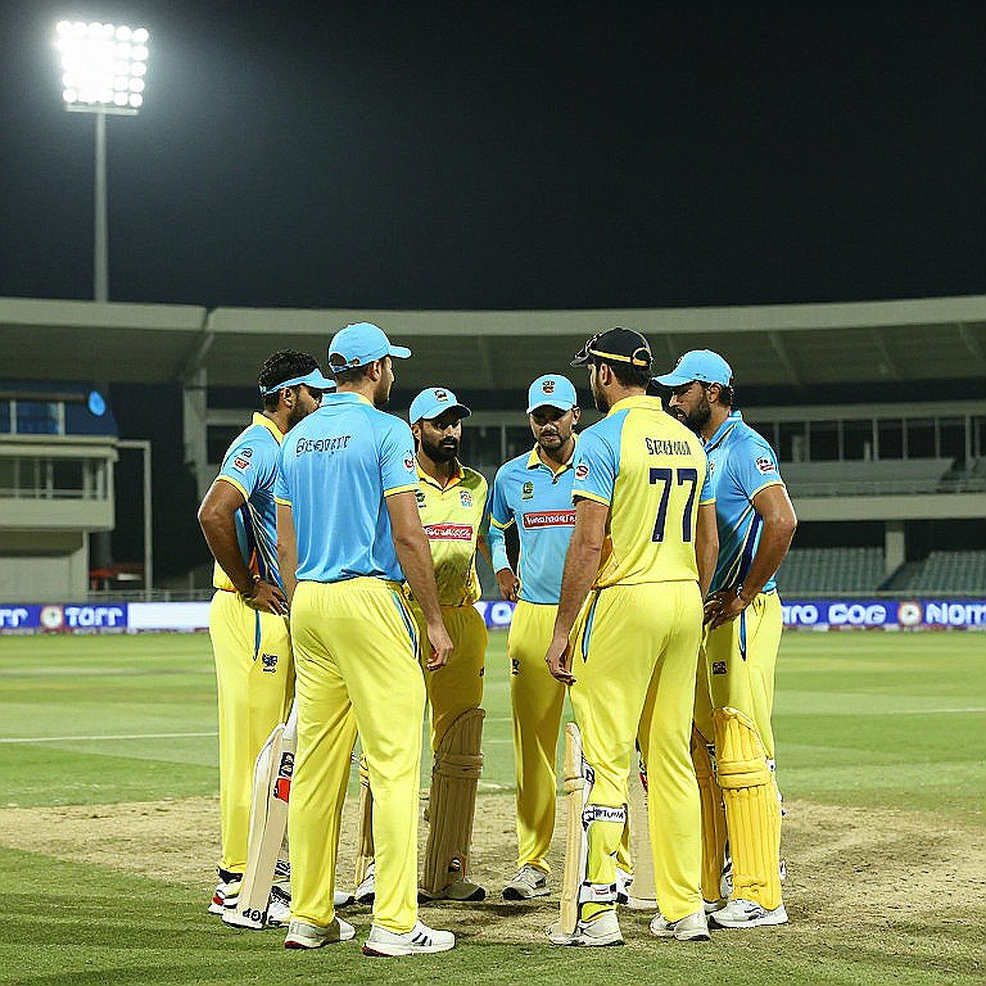
India's chase began as an explosion. Ninety-three without loss in 5.5 overs, a rate near 16 an over. The Abhishek–Sanju Samson stand later became the pair's fifth 50-plus opening partnership in a calendar year, equalling the Indian record. Then Michael Bracewell's off-spin broke it and dismissed Abhishek. At 11 overs India were 128 for 4 — 35 runs and four wickets in roughly 5.1 overs after that start.
Here is where the match actually lived. Chasing 226, India needed 98 off 54 balls with six wickets in hand, about 10.9 an over. That is a coin-flip position, not control. And the record was set inside precisely that precarious passage.
India's powerplay was record-breaking and structurally fragile at once. Sixteen runs an over cannot be sustained across 20 overs; the 6.8-an-over middle phase was the mathematical correction. While the openers were flying, the middle order was inheriting a required rate it had not been constructed to chase. This is the classic powerplay-or-bust T20 profile.
The most diagnostically valuable content, though, sits in the bowling column. Axar Patel took 1 for 51 in four overs, an economy of 12.75. Bhuvneshwar Kumar went for 49 in four at 12.25. Arshdeep Singh 45 in four, Mayank Yadav 40 in four, Nitish Reddy 40 in four. Five Indian bowlers conceding 40 or more in the same T20I innings had never happened before; across all men's T20Is it was the 13th such instance.
Axar's number deserves separate flagging. His value in T20 cricket is control and middle-overs economy, not wicket-taking. Against a career norm in the low sevens, 12.75 is roughly a 75 per cent overshoot. On a single innings that is either a one-off — short square boundaries plus Phillips targeting one side — or an early warning about his white-ball control. One innings cannot separate the two.
The co-selection of Bhuvneshwar and Mayank Yadav, with Bumrah absent from the squad rather than merely rested from the XI, reads as deliberate rotation rather than a first-choice attack. The two quicks do different jobs: one controls, one attacks with pace. But 67 runs in the final five overs says nobody was actually given a defined death role.
My habit is to keep an eye on the age curve. I count the days, not to measure time, but to notice what changes in a teenager. Abhishek, Nitish Reddy and Mayank Yadav are all early-career. This XI is an audition window, not a first-choice side.
Which is why I quarrel with the headline. The Christchurch record is the least predictive thing in the story. The two genuinely useful findings are the absence of a death-overs plan and the template for Abhishek's post-powerplay spin vulnerability. The dismissal to Bracewell was not random: holding a finger-spinner back for the over after the fielding restrictions lift is now the obvious counter.
My second quarrel is with the venue. 225 for 8 is a product of Christchurch's pitch and short boundaries, not evidence of a shift in bilateral power. New Zealand's home ceiling has risen — a genuine capability marker for their batting unit, but one venue and one innings.
My third quarrel matters most. Reading this as Indian decline would be a category error. The batting ledger is healthy: 93 without loss in 5.5 overs, a record-equalling opening pair, a year of continuity. The deficit is concentrated in one phase and one absence.
Six weeks of silence in Margate taught me that absence is also a kind of evidence. Bumrah not being in the squad is the loudest sentence of this innings, and it is written nowhere.
The academy pitch is a dig site; the boots are artifacts; the boy is still becoming. Abhishek's seven first-ball sixes are a sample of his nerve, not proof of his ceiling. The question now: will opponents answer those seven sixes with a finger-spinner, or will India rewrite its death-overs roles first?