
Kabaddi Champions League Grows to Ten Teams, but Its Sustainability Remains in Question
সংক্ষিপ্ত উত্তর: ভারতের কাবাডি চ্যাম্পিয়ন্স League (সিকেএল) আট দল থেকে দশ দলে সম্প্রসারিত হচ্ছে; নতুন দল ঝাজ্জর জাগুয়ার্স ও কুরুক্ষেত্র নাইটস। প্রতি দলের নিলাম পার্স পাঁচ কোটি রুপি (প্রায় ছয় লাখ মার্কিন ডলার), নিলাম পুলে তিনশোরও বেশি খেলোয়াড়। সর্বোচ্চ দামি খেলোয়াড় আয়ান লোচাব (১৭ দশমিক ৪ লাখ রুপি, ঝাজ্জর জাগুয়ার্স); এরপর ভারত হুডা (১৬ দশমিক ৬ লাখ, কার্নাল কিংস), নবীন গোয়াত (১৫ দশমিক ২ লাখ, কুরুক্ষেত্র নাইটস)। এশিয়ান Games অধিনায়ক বলে পরিচিত সুনীল মালিক ফরিদাবাদ ফাইটার্সে গেছেন মাত্র ১০ লাখ রুপিতে—যা দাম ও পদবির অসঙ্গতি তৈরি করে এবং যাচাই প্রয়োজন। মূল প্রেক্ষাপট: প্রো কাবাডি Leagueের সম্প্রচার-স্বত্ব সংকটের কারণে পিকেএল ১৩ অনিশ্চিত হয়ে পড়েছে (সম্ভাব্য জুন-জুলাই ২০২৭), সেই ফাঁকেই সিকেএল সম্প্রসারিত হচ্ছে। তবে দশটি দলই হরিয়ানার শহরের নামে, তাই এটি জাতীয় বা International নয়—একরাজ্যিক দ্বিতীয় স্তরের League। নিলাম মানের সূচক নয়, বরং বাজার-ক্রম। তৃণমূলের শক্তিশালী সংকেত: সোনিপাতে ৬,৪০০ ও রোহতাকে ৬৫০ Articlesন। ঝুঁকি: অপ্রকাশিত সম্প্রচার/স্পনসরশিপ আয়, অত্যন্ত কম খেলোয়াড় পারিশ্রমিক, ফেডারেশন স্বীকৃতি ও সুশাসন অস্বচ্ছ।
India's domestic Kabaddi Champions League (CKL) is expanding from eight franchises to ten for the coming season. The two new entrants are Jhajjar Jaguars and Kurukshetra Knights. The player-auction purse has risen to Rs 5 crore per franchise, roughly USD 600,000, and the auction pool contains more than 300 players. But those numbers should not be read as evidence that Indian kabaddi's market is expanding. The league is, in practice, a second-tier competition confined almost entirely to the state of Haryana, and the principal driver of its growth is the broadcast-rights crisis engulfing the Pro Kabaddi League (PKL), the country's top-tier competition.
What the sport actually is
Kabaddi is a 4,000-year-old South Asian contact sport, often described to outsiders as a competitive version of the children's tag game fused with wrestling. The crucial difference from wrestling is that attack and defence are strictly separated in time.
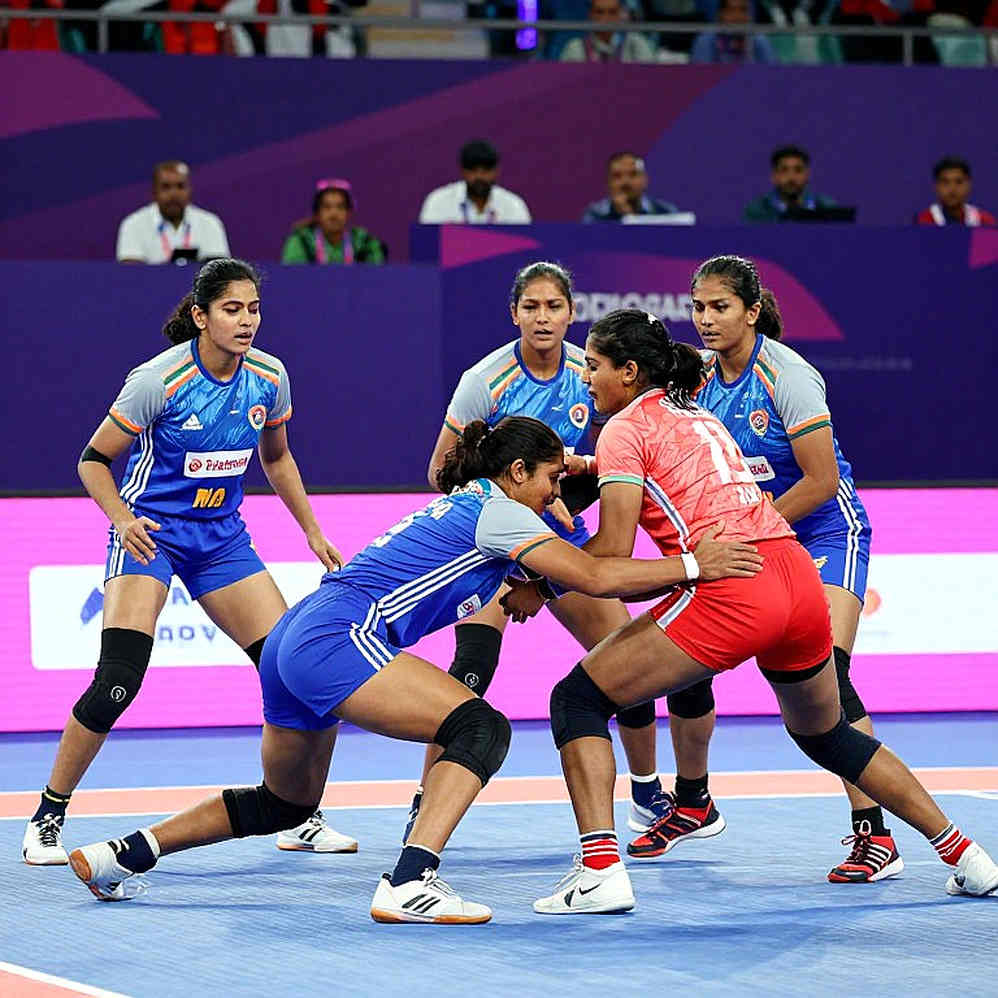
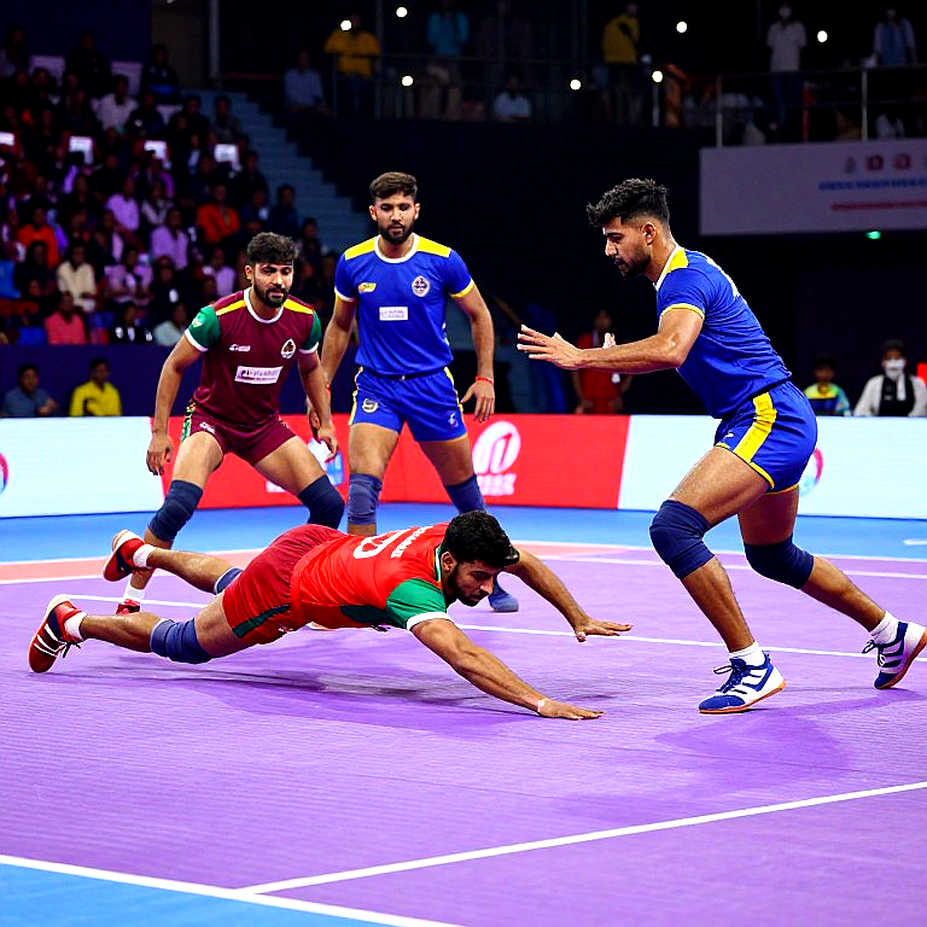
The attacker, called a raider, crosses into the opponent's half and has 30 seconds to touch one or more defenders and return safely to his own half. Each successful touch scores a point. Throughout the raid the raider must continuously chant "kabaddi, kabaddi"; if the chant breaks, the raid is void and the raider is out. This single rule is what makes the sport an extreme test of endurance. The seven defenders try to physically stop the raider inside their half—a successful tackle scores a point and sends the raider off. When every player on one side is out at once, the opponent receives two bonus points and the eliminated team revives on court, a mechanism that produces rapid momentum reversals. After two consecutive scoreless raids, the third becomes a mandatory do-or-die raid; failure means automatic elimination. Crossing the bonus line deep in the opponent's half earns an extra point.
The CKL is almost certainly played in the standard, mat-based seven-a-side format, since it recruits PKL-adjacent players. But no league announcement states the ruleset explicitly, and that is a material gap. It is not even confirmed whether the league uses standard style rather than the rural Punjab circle style played on a round field.
The auction picture
The highest-priced player is Ayan Lochab at Rs 17.4 lakh, signed by Jhajjar Jaguars. Second is Bharat Hooda at Rs 16.6 lakh to Karnal Kings, third Naveen Goyat at Rs 15.2 lakh to Kurukshetra Knights, followed by Singroha at Rs 11 lakh and Sunil Malik at Rs 10 lakh to Faridabad Fighters.
Here lies the story's sharpest contradiction. Sunil Malik is presented in the report as "India's Asian Games captain." Yet that captain was bought for less than Ayan Lochab and less than three other players. If he genuinely is a national-team captain, the price represents a name discount, and there are three plausible explanations: he is a defensive or utility player whose market value is underrated relative to flair raiders; age or form has declined; or the "Asian Games captain" designation belongs to an earlier squad rather than the current one. The report presents the anomaly as neutral fact and never interrogates it, nor does it attempt to verify the honorific.
Second, auction prices are a weak proxy for quality. Against a Rs 5 crore purse, a top price of Rs 17.4 lakh—about USD 20,000—is roughly one-thirtieth of a team's budget. That implies purses are nowhere near exhausted on a handful of stars, and that most of the 300-player pool earns very little. The "highest-priced player" label is therefore a price ranking, not a quality ranking.
A Haryana league with a national name
All ten CKL franchises are named after Haryana cities: Jhajjar, Kurukshetra, Bhiwani, Rohtak, Karnal, Gurugram, Sonipat, Panipat, Faridabad and Hisar. In practice this is an intra-state competition, not a national one. The "Champions League" branding overstates its geographic scope. Haryana is unquestionably one of India's kabaddi heartlands, so the quality of competition is not in doubt; the question concerns brand and market reach.
The strongest evidence is at the grassroots
Central trials in Sonipat drew 6,400 registrations, and Rohtak 650. These figures are far more credible than any promotional claim, because they reflect genuine cultural demand. A caveat is essential, however: registrations are not screened talent. This is a signal of grassroots interest, not proof of pipeline quality.
The commercial model's gaps
The report discloses nothing about broadcast or sponsorship revenue. When a league-expansion announcement names no media partner, the usual inference is that no significant media deal exists. PKL 13 has been pushed toward June–July 2027 because its broadcast arrangement has ended and a new partner has not been secured. That vacuum is precisely the CKL's opportunity. The league's growth is therefore a symptom of instability at the top tier, not proof of a thriving second tier.
Governance questions
The report does not say who operates the league, whether it is sanctioned by the Amateur Kabaddi Federation of India or the International Kabaddi Federation, or what framework governs player contracts and welfare. In a market of 300-plus players, many from rural backgrounds with limited bargaining power, that silence is serious.
The road ahead
Expansion to ten teams and a higher purse deserve acknowledgement, but they should not be read as the rise of national or international kabaddi. The league's real assets are Haryana's dense, cheap talent pool and organic demand signals such as the 6,400 trial registrations. Its real risks are three: an undisclosed revenue model, extremely low player wages, and opaque governance. If the PKL secures a new broadcast partner for 2027, the CKL's strategic rationale may weaken. Three signals are worth tracking: any broadcast or sponsorship deal, a federation sanctioning announcement, and genuine match and attendance data from season two.
Related Players