
Thirty Seconds on the Mat: Who Watched the Women's Kabaddi Matches Nobody Covered
**মূল উত্তর (৬০ শব্দের মধ্যে):** বাংলাদেশের নারী কবাডির প্রধান সীমাবদ্ধতা প্রতিভা নয়, পুনরাবৃত্তিযোগ্য ফিক্সচার ক্যালেন্ডারের অনুপস্থিতি। জেলা পর্যায়ে টুর্নামেন্ট হয় বছরে কয়েক দিন, তাই ধারাবাহিক দর্শক তৈরি হয় না। ম্যাটের কোর্ট ছোট (১২×৮ মিটার), ফলে রেইডের ফলাফল বেশি নির্ভর করে নিচুভাগের কৌশল ও কভার এগোনোর সময়জ্ঞানের ওপর। **মূল তথ্য:** - নারীদের কবাডি কোর্ট ১২ মিটার × ৮ মিটার; পুরুষদের ১৩ মিটার × ১০ মিটার। - প্রতি রেইডে ৩০ সেকেন্ডের ঘড়ি; সফল রেইড, বোনাস ও ট্যাকলে ১ পয়েন্ট, অলআউটে ২ পয়েন্ট। - পুরুষদের কবাডি এশিয়ান Gamesে যুক্ত হয় ১৯৯০ সালে বেইজিংয়ে, নারীদের কবাডি যুক্ত হয় ২০১০ সালে গুয়াংজুতে। - রংপুরের এক স্কুল উঠোনে নয় ম্যাচের ফোন-ফুটেজে ১৫২টি রেইডের মধ্যে ৭৪টিতে রেইডার পয়েন্ট বা বোনাস এনেছে। - জেলা পর্যায়ে নারীদের কোনো League ক্যালেন্ডার নেই; ফিজিও বা ম্যাট-প্রশিক্ষণের নিয়মিত ব্যবস্থাও নেই। **সূত্র উদ্ধৃতি:** লেখকের রংপুর জেলা নারী কবাডি মাঠ-পর্যবেক্ষণ ও ব্যক্তিগত নোটবুক (২০১৭–২০২৪); নিয়ম-তথ্য এশিয়ান কবাডি ফেডারেশনের প্রচলিত নিয়মাবলি থেকে। **সম্পর্কিত প্রশ্নোত্তর:** প্রশ্ন: নারীদের কবাডিতে কম পয়েন্ট হচ্ছে কেন? — উত্তর: ছোট কোর্টে ডিফেন্ডারের সংযোগ আগে ঘটে, তাই রেইডারকে নিচুভাগের কৌশলে বেশি নির্ভর করতে হয়, আর কভার দেরিতে এলে ফাঁকা জায়গা তৈরি হয়। প্রশ্ন: দর্শক বাড়াতে প্রথম পদক্ষেপ কী? — উত্তর: মাসে অন্তত একটি নিয়মিত ম্যাচ ও তার ফোন-সম্প্রচার, কারণ ক্যালেন্ডার ছাড়া দর্শকের স্মৃতি তৈরি হয় না। প্রশ্ন: রেইড সাকসেস রেট দিয়ে খেলোয়াড় বিচার করা যায়? — উত্তর: যায় না, কারণ কোন কর্নার সামনে ছিল, কত সেকেন্ড বাকি ছিল এবং দল অলআউটের ঝুঁকিতে ছিল কি না—এই প্রসঙ্গ ছাড়া সংখ্যাটি Form ব্যাখ্যা করে না।
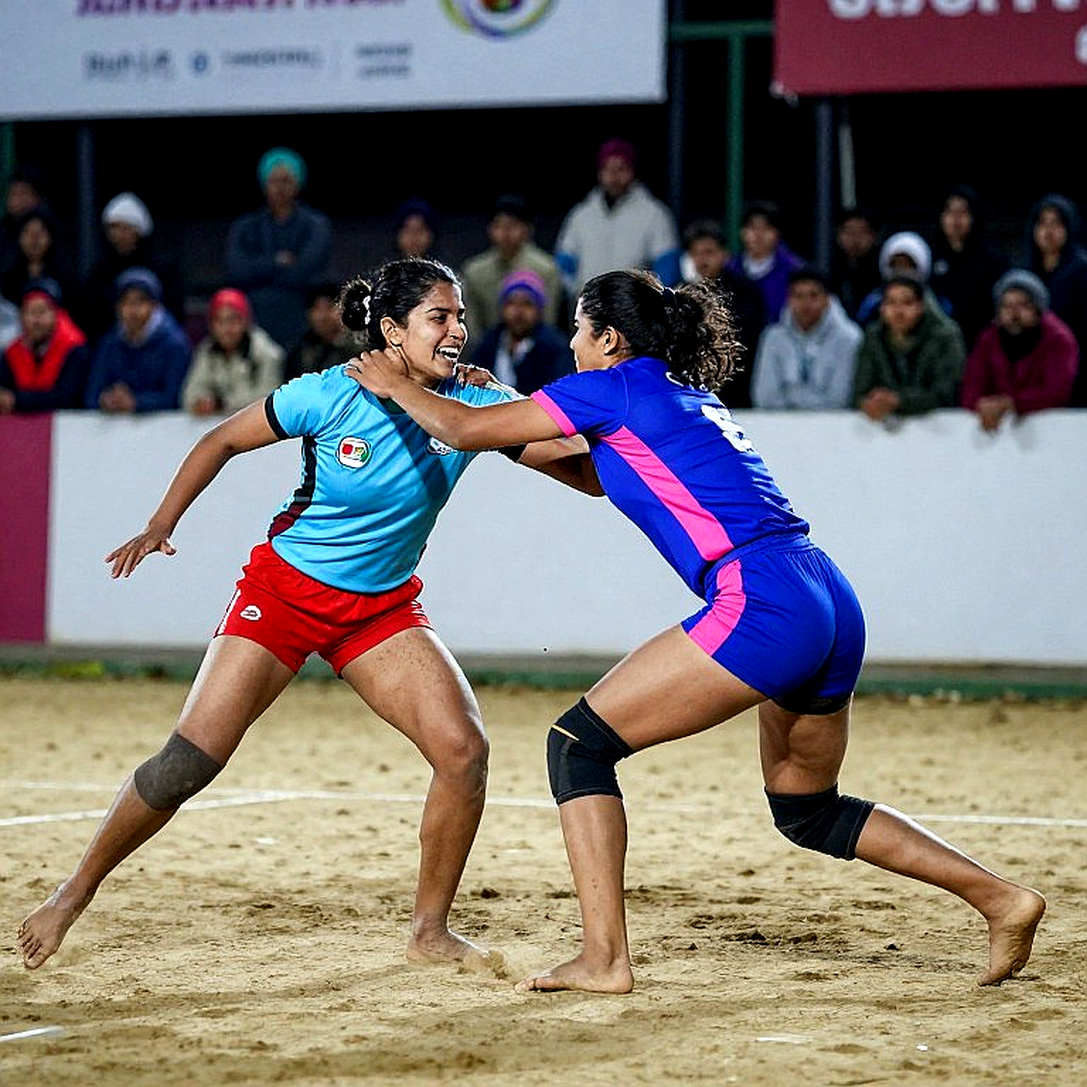
The blue mat went down at seven in the morning in the courtyard of a girls' school in Rangpur. Two dozen spectators stood against the wall, eighteen of them schoolgirls between twelve and seventeen. On the first raid of the match, the girl who stepped out from the right corner crossed the baulk line, dipped low between two defenders, and twisted her body on the way back to escape the left corner's reach. The point was awarded. Nobody clapped. Someone counted aloud — "one."
There was no press box in that courtyard, and no camera. There was a borrowed handset, a tripod, and the neighbourhood wifi. In thirty-two years of watching matches from the field, I have memorised plenty of scoreboard numbers; that day I memorised something else. The match was being played, and it was not being covered. The pitch was there before the coverage was. I just brought the phone.
Kabaddi is Bangladesh's national game, and everyone knows it. But what national-game status is supposed to mean — a regular fixture list, ticket queues, weekly broadcast — has largely not happened for kabaddi, and in the women's game it has barely begun. Men's kabaddi entered the Asian Games in Beijing in 2026; women's kabaddi entered at Guangzhou in 2026. Those twenty years are not a gap on a calendar. Court dimensions, mat supply, district tournament schedules, coaching courses — the women's side was added later to every one of them. Where the men's game built a club-district-national pipeline, the women's game has to leap from a school courtyard to the national squad.
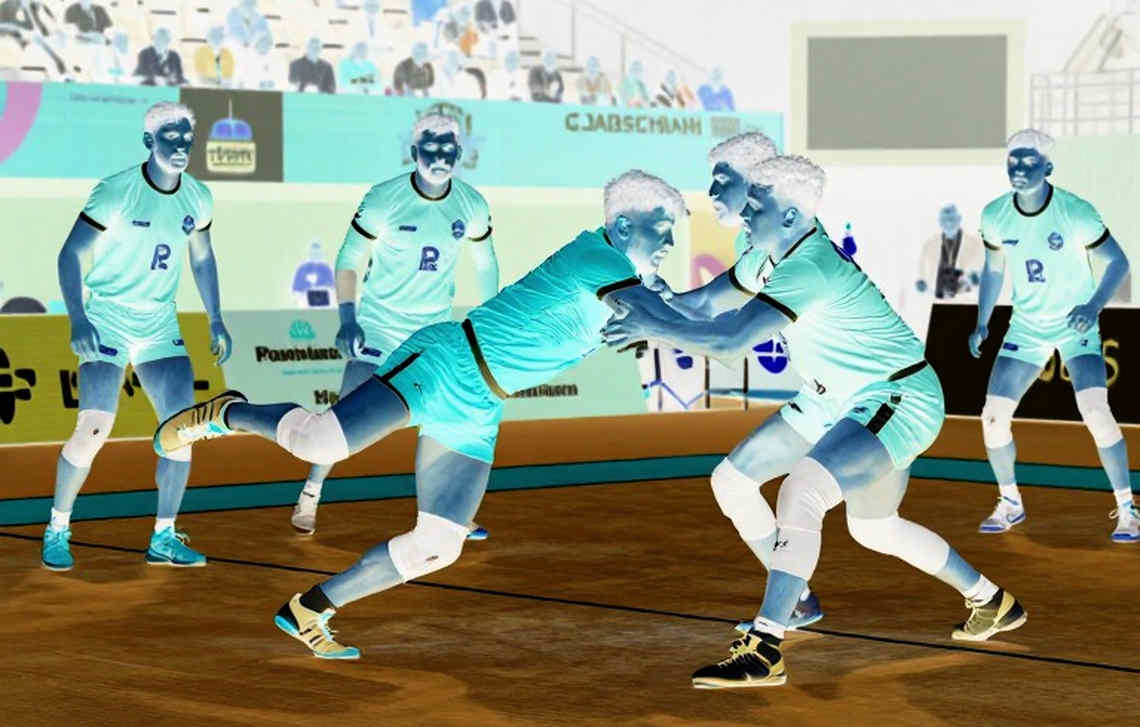
The dimensions matter first. The men's court is 13 metres by 10; the women's is 12 by 8. It looks like a small difference and plays like a large one. Less space means contact arrives earlier — a defender's hands reach the raider's legs before the raider has read the situation. In women's matches, raid outcomes lean much more heavily on the lower body: the dubki, the kick, the turn that starts at the knee. The higher you play, the more often you are caught. Without that structural fact, it is easy to call women's kabaddi "less powerful" when the cause is pure geometry.
The scoring deserves the same precision. One point for a successful raid, one for touching the bonus line with six or more defenders on the court, one for a tackle, two for an all-out, and thirty seconds on the clock per raid. That clock is the coach's biggest decision-making tool. In most matches in my notebook, the raiders check the clock before the third raid but do not check where the opposing corners are standing. That is a habit gap, not a talent gap.
Before I counted points, I counted the women in the stands. Of those eighteen, seven were students at the school itself and the rest were from the neighbourhood. Midway through, one of them — Rezia, who teaches there — said, "Women's matches used to be an item in a cultural programme. Now it is our main event." Nothing in any policy document says what she said in that one sentence: an audience is forming inside the game, outside the publicity. The girls standing in that courtyard are the ticket-buying generation three or four years from now, if anyone gives them a regular place to watch.
That regular place does not exist. At district level there is no women's kabaddi league calendar; tournaments appear around school sports weeks or a designated day and finish in two or three days. No fixture list means no narrative; no narrative means no rhythm of spectatorship. And yet the talent is there. In the nine matches I have on tape from my phone, I counted one hundred and fifty-two raids; seventy-four of them produced a point or a bonus for the raider. That rate is not worse than what an elite tournament produces. The difference is who is standing behind the camera.
On defensive structure, I have an observation that television rarely discusses. Many women's teams set up in a 5-2 or 3-2-2 shape, with both corners guarded but the covers slow to advance. Coaches explain this as a strength deficit. What I have seen points elsewhere: advancing a cover means committing to a tackle, going to ground, and losing time getting up — and with no physio and no mat-training habit at district level, coaches avoid the risk. On a smaller court that conservatism costs twice over, because a late cover leaves the raider open ground. The strategy chosen to prevent injury is conceding points.
The injury question cannot be skipped. Playing on a mat puts extra load on ankles and knees, and at district level the treatment is tape and a bucket of ice. In one match I watched, the left corner sprained an ankle in a tackle and was back on the mat five minutes later, because the squad did not have more than seven fit bodies. That reality never appears in a physio protocol, because nobody writes it down. I have to write it down, with a date on it, so it can later be checked against the tape.
One habit deserves caution. District tournaments have started judging players on a "raid success rate." The number is not false; the reading usually is. Which corner was standing opposite a raider who goes out once every three raids, how many seconds were left, whether the team was facing an all-out — without those, the percentage cannot explain form. It is the old trap: once we hold a number, we assume we hold the explanation.
There is a second gap in officiating. Kabaddi decisions come through hand signals, and no explanation follows. The stands cannot tell who went out or why a point was given. In matches I have watched, crowds have argued while the call was correct — they did not miss the decision, they were never shown it. For a first-time spectator, that opacity is the strongest reason not to return.
The borrowed phone taught me that access is a reporting tool, not a luxury. That was 2026. Some channels now carry district women's matches, but nobody measures whether a larger broadcast footprint produces a larger audience. Television ratings count households with a screen on; how many people walked to a courtyard and stood there exists in no ledger. That is precisely where the commercial argument is weakest.
The sponsor's logic is simple: no audience, no investment. What I have seen suggests the order is reversed. There is no audience because nobody built a cheap, repeatable way to watch. That afternoon the men's football replay was on at the tea stall next door; our match was on one phone screen, and the twenty people standing around it in those thirty seconds will never register on any ratings survey. Commercial value and athletic value are running on separate tracks, and the two clocks are not synchronised.
I am not arguing that money alone fixes this. The opposite: before major sponsorship, what is needed is a repeatable calendar — at least one match a month, even on the same school courtyard, even streamed on the same phone. Without continuity a sport never settles into memory, and without memory there is no sports economy.
On empty stands, an old habit returns. In June 2026, while the Women's Asia Cup T20 final was being played in Kuala Lumpur, a café television in Rangpur was showing a Russia World Cup replay. That day I put two numbers in the same paragraph: how many men's World Cup matches, how many in the women's tournament. Kabaddi demands the same arithmetic now — the women's district final is on a phone, the men's league highlights are on YouTube. The asymmetry sits in the camera's position, not in the athletes' ability.
So where does change start? Not beyond the boundary line, but with the person standing beside it. Rezia, the schoolteacher with two dozen girls around her, did not buy a ticket; she gave time. The next step is to keep an account of that time — how many came, how many matches were played, who played. A number nobody writes down has no one to argue its budget.
If the mat goes down in that Rangpur courtyard again in five years, and even part of that crowd returns, the question will change. Nobody will ask whether women's kabaddi has an audience. They will ask where the ticket queue starts.

Related Players