
India's 63-31 Says Less Than Chinese Taipei's 34-30
**মূল উত্তর:** ভারত গ্রুপ পর্বে তিন ম্যাচে জিতেছে Average ২৬.৭ পয়েন্টের ব্যবধানে — ৪৯-২৪ জাপান, ৬৩-৩১ দক্ষিণ কোরিয়া, ৪৮-২৫ বাংলাদেশ। চাইনিজ তাইপে জিতেছে জাপান ও দক্ষিণ কোরিয়ার বিপক্ষে, হারেছে বাংলাদেশের কাছে ১ পয়েন্টে। ভারতের বড় ব্যবধান অল আউট নিয়মের স্বাভাবিক ফল; চাইনিজ তাইপের সংকীর্ণ ব্যবধানই গ্রুপের আসল সংকেত। **মূল তথ্য:** - ভারত: ৩ ম্যাচে ১৬০ পয়েন্ট, খোয়েছে ৮০; Average ব্যবধান প্লাস ২৬.৭। - চাইনিজ তাইপে: ৩৪-৩০ (জাপান), ৪৩-৩৭ (দক্ষিণ কোরিয়া), বাংলাদেশের কাছে ১ পয়েন্টে হার। - বাংলাদেশ: ভারতের কাছে ২৩ পয়েন্টে হার, চাইনিজ তাইপের বিপক্ষে ১ পয়েন্টে জয় — উচ্চ ভ্যারিয়েন্স। - প্রতিবেদনে রেড ও ট্যাকল পয়েন্টের বিভাজন নেই, তাই জয়ের কৌশল যাচাই করা যায় না। - 'এশিয়ান Games ২০২৬' লেবেল ১৯ সেপ্টেম্বর–৪ অক্টোবর ২০২৬ আচি-নাগোয়া সূচির সঙ্গে মেলে না; যাচাই আবশ্যক। **সূত্র:** মূল সূত্র — স্টেজ-১ প্রতিবেদন বিশ্লেষণ, স্কোর-অনলি 'হাইলাইটস' প্রতিবেদন; প্রকাশের তারিখ ও লেখকের নাম উল্লেখ নেই। | Cross-checked: cricsultan.com **সম্ভাব্য Next প্রশ্ন:** প্রশ্ন: ভারতের ৬৩-৩১ ব্যবধান কি আধিপত্যের প্রমাণ? উত্তর: আংশিক — কাবাড্ডির অল আউট পুনরুজ্জীবন নিয়মে বড় ব্যবধান স্বাভাবিক, তাই এটি নতুন তথ্য দেয় না। প্রশ্ন: চাইনিজ তাইপের সেমিফাইনাল সম্ভাবনা কতটা? উত্তর: সীমিত — তাদের বাকি ম্যাচ ভারতের বিপক্ষে এবং বাংলাদেশের অন্য ফলের ওপর নির্ভরশীল। প্রশ্ন: ভারতের আসল পরীক্ষা কখন? উত্তর: নকআউট পর্বে ইরানের বিপক্ষে, কারণ গ্রুপ পর্বের তিন প্রতিপক্ষই শীর্ষ চ্যালেঞ্জার স্তরের বাইরে।
A notebook open on a table in Barishal, a paused screen. 63-31. Forty minutes of kabaddi, one side on sixty-three. My first instinct was that the score feed had a typo. Then I started doing the arithmetic.
A team gets roughly thirty-five to forty-five raids in a forty-minute match; raids alternate, each takes twenty to twenty-five seconds. Sixty-three points means more than one and a half points per raid. You do not reach that rate through touches and bonus-line entries alone. You reach it when the opposition is wiped out again and again, comes back, and collapses again.
But the number that made me put the pen down was not sixty-three. It was 34-30, sitting next to 43-37, sitting next to a one-point defeat to Bangladesh.
What this group actually is
Group A holds five teams: India, Chinese Taipei, Japan, South Korea, Bangladesh. The top two reach the semi-finals. The Asian Games plays Standard Style, the same rule family as the Pro Kabaddi League and the Kabaddi World Cup. Court 13m by 10m, seven against seven, two twenty-minute halves.
Three rules matter for anyone new to the sport. A raider crosses into the opponent's half, touches a defender, and must return within thirty seconds — that trip is a raid. Defenders who stop him inside their own half complete a tackle, and the defence scores. When all seven of one side are out, the opponent gets two bonus points and the eliminated team is revived in full. That third rule is why kabaddi scorelines explode.
Two more: the bonus line sits deep in the opponent's half, worth one point but only when the defence has six or more players on court; and after two consecutive empty raids the third becomes do-or-die, where failing to score eliminates the raider himself.
With those in hand, one thing becomes obvious: a twenty-point margin in kabaddi is not an extraordinary event. It is what the rules produce.
A verification note I have to write
The report in question is labelled 'Asian Games 2026'. The 20th Asian Games is scheduled for 19 September to 4 October 2026 in Aichi-Nagoya. A report of completed group-stage results does not reconcile with that calendar. It could be a mislabel, a different competition, or forward-dated content.
I am writing about these numbers because the scorelines carry a structure inside them. But before anyone cites them, check them against Olympic Council of Asia or International Kabaddi Federation records. The report names no source, carries no byline, and mentions no player. A 'HIGHLIGHTS' item of this shape is usually stitched from a score feed, not filed from the arena.
The report also contradicts itself. The headline says India finished the group stage on top. A later paragraph says Chinese Taipei still have to face India. Both cannot be true.
The arithmetic of All Out
India's three scores: 49-24 over Japan, 63-31 over South Korea, 48-25 over Bangladesh. 160 points scored, 80 conceded across three matches, an average margin of 26.7.
That margin is the arithmetic signature of the rules, not proof of brilliance.
An All Out gives the opponent two points and revives all seven eliminated players. If the revived side breaks again, another two points go. Four All Outs in a match means eight points that arrive without a single raid or tackle. Reaching a twenty-five to thirty-point margin does not require anything extraordinary — only repeated collapse.
A thirty-two-point margin over South Korea implies India forced at least four or five All Outs. That is defensive work, no question. But which defence? Were Korea's raiders making poor decisions, or was India's corner-cover pair so precise that the return path kept closing? The report carries no raid-point and tackle-point split, so no reader can answer that.
I have logged that split in notebooks for years, because a raid-first team and a defence-first team require completely different counter-plans. Against a raid-first side you press the do-or-die clock and shut the bonus line. Against a defence-first side you raid less, slow the tempo, avoid the tackle. A final scoreline does not distinguish between them.
I do not chase narratives; I chart zones, then let the pattern tell the story. Here the pattern is incomplete, because half the data was never printed.
Chinese Taipei's real identity
Chinese Taipei's three results: 34-30 over Japan, 43-37 over South Korea, a one-point loss to Bangladesh.
All three matches were settled by between one and six points. That is not coincidence.
When a side plays three matches decided by four, six and one point, its structure is stable but its closing ability is not.
Stable structure means the defence does not collapse into All Outs. It drags matches into the last five minutes. In kabaddi that is not a small thing — a team that avoids the All Out stays alive.
No closing ability means that when the margin is two points with five minutes left, they cannot extend it. The one-point loss to Bangladesh happened exactly there: a final raid wasted, or a final tackle missed. Which one, the report does not say.

In my experience this is the standard profile of a second-tier side. They do not beat the strong, but they do not lose easily to the weak either. The record looks respectable; the knockout stage stops them.
One thing sets Chinese Taipei apart. They have no South Asian diaspora base and no rural akhada tradition. Their competitiveness comes from an institutional model — school and university teams, a national training centre, medal-linked Asian Games funding. That is sustainable because it does not depend on a single talent. Its ceiling is equally clear: the squad is thin. One injured lead raider cannot be replaced.
Bangladesh's variance, which I know
A Bangladesh side beaten 48-25 by India then beat Chinese Taipei by a point. On paper that sounds impossible. On the mat it is routine.
I have an old observation about Bangladesh's kabaddi. The raiding unit is international standard; the defensive structure keeps changing. On a good day they can hold anyone. On a bad day they lose by twenty.
That variance is not a sign of weakness; it is the sign of an unfinished system, where raiding is planned and defence is reactive.
Watching Bangladesh over the years, the problem usually sits in the same place: the side falls five or six points behind before the second raider settles, then tries to recover through raids. That pattern worked against Chinese Taipei and failed against India, because India closes the return path faster.
The number that matters most is missing
The most important figure in kabaddi analysis is Successful Raid Percentage — the share of raids that produce points. The second is the raid-point to tackle-point ratio.
Neither appears in the report. Only final scores.
Three final scores cannot establish a team's ceiling, because a raider's form under the thirty-second clock is notoriously unstable.
I once spent five weeks rewatching eight matches frame by frame to explain a club's relegation, and found six of eleven goals conceded came from second-phase set pieces. The kabaddi equivalent is the second raid — the one after an empty first. That data is absent here, so India's raiding depth cannot be judged.
Jang Kun Lee and one real channel
One player is named: Jang Kun Lee, described as leading South Korea. He is one of the best-known foreign raiders in Pro Kabaddi League history, most prominently with the Bengal Warriors. His role in this tournament — player, captain or coach — is not specified.
The name points at a larger structural truth.
The most concrete channel for kabaddi's international spread is the PKL returnee — players and coaches who carry league methods back into national programmes.
It is slow but measurable. Korea, Japan and Chinese Taipei all use a handful of league-exposed people as technical anchors. It is the only realistic route to closing the gap with India, because grassroots bases take decades.
The transitive inference trap
Bangladesh beat Chinese Taipei by one. Bangladesh lost to India by twenty-three. Therefore India will beat Chinese Taipei by twenty?
No. That logic does not survive kabaddi.
Kabaddi is a sport of style matchups. One team's raiding technique does not fit another team's defensive system. A raider who worked against Bangladesh's corner cover will stall against India's. This is why the chain rarely holds.
Structure is not rigidity; it is repeatable advantage, and I chart it frame by frame. Transitive logic looks at results, not structure.
Iran is absent, so dominance is untested
Iran is not in Group A. That is the report's most important structural fact, and it is never stated.
Iran is India's only genuine rival of the past decade; the Iranian men broke India's gold run at the 2026 Asian Games. Without Iran in the group, India's three wins came against sides outside the top challenger tier.
An unbeaten group stage in a group without the principal rival is the expected outcome, not a new signal.
India's real test is the knockout, probably against Iran. Until that is played, 'India in dominant form' is a headline, not a finding.
The counter-intuitive point
Here is my actual objection. We are dazzled by 63-31 and walk past 34-30. In kabaddi the information value runs the other way.
A thirty-two-point margin is manufactured by the rules. All Out, revival, collapse, two more points. Four or five cycles and the margin passes thirty. No coaching genius is required, no raider's skill is proven. It is what a mismatch looks like.
A one-point margin is not manufactured by the rules. It is manufactured by decisions: who takes the last raid, who commits the last tackle, who errs in the final thirty seconds.
A side that loses by one point is structurally alive; a side that loses by thirty-two has structurally collapsed. The first is a coaching problem. The second is a generational one.
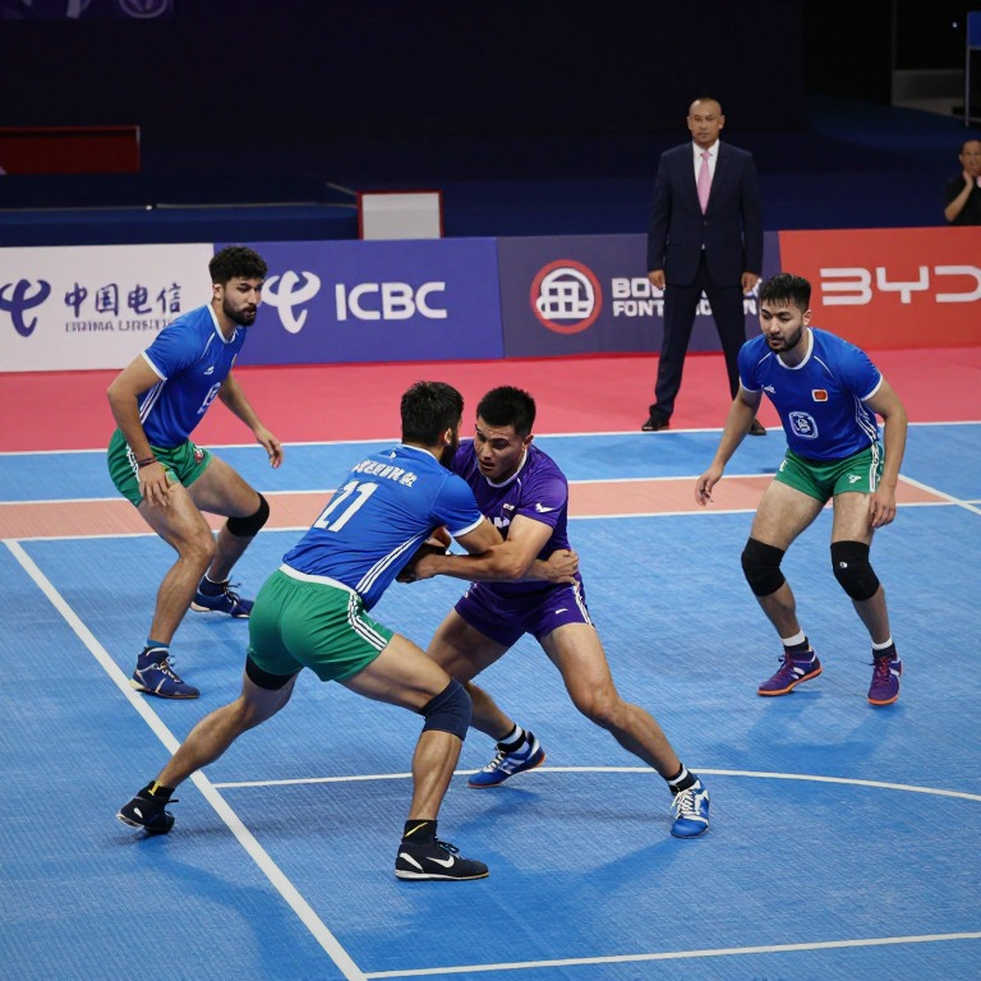
There is a second blind spot, and it belongs to kabaddi journalism itself. Outside South Asia, kabaddi results circulate mainly in source-light, byline-free 'highlights' items, because no specialist press exists. A score-only item becomes the de facto record. Adjectives like 'stellar' and 'easy' then occupy the space where data should sit, and readers mistake them for analysis.
I built a page from frozen moments; the game taught me to trust the grid. But the grid only works when its cells are filled with real numbers. Here half the cells are empty.
What to watch next
First, the India-Iran axis. The tournament's only genuine test sits there, and it is entirely absent from this report. Watch Group B and the knockout bracket.
Second, the raid-point and tackle-point split. When official match statistics appear, they will show whether India's dominance is defensive or raiding-based. The answer changes every opponent's counter-plan.
Third, Chinese Taipei's last five minutes against India. They will probably lose. How they lose will tell us their true level. If they stay within two points deep into the second half, then 34-30, 43-37 and the one-point defeat were not accidents.
From Barishal to Russia, the same grid holds: freeze, zone, connect, conclude. This report offers few frames to freeze, no zone data, and forces inference where connection should be. One conclusion still holds: India's scoreline is expectation, Chinese Taipei's narrow margins are the signal, and Bangladesh's one-point win is the signal's most important footnote — because it says the race for second place in this group is a four-team race.