
HomeField HockeyPenalty-Corner Drama in India vs Pakistan Semi-Final: The Real Test Behind Pool Form
Penalty-Corner Drama in India vs Pakistan Semi-Final: The Real Test Behind Pool Form
২০২৬ এশিয়ান Games পুরুষ হকির সেমিফাইনালে ভারত ও পাকিস্তান মুখোমুখি হবে। ভারত গ্রুপ পর্বে অপরাজিত এবং পেনাল্টি কর্নারে হারমানপ্রীত সিংয়ের ওপর নির্ভরশীল; পাকিস্তান সুফিয়ান খানের ড্র্যাগ-ফ্লিক ও দ্রুত পাল্টা আক্রমণের ওপর ভরসা করবে। ম্যাচের মূল প্রশ্ন পেনাল্টি কর্নার রূপান্তর, প্রথম রানারের কার্যকারিতা এবং পাকিস্তানের প্রতিরক্ষা চাপ সামলাতে পারে কি না।
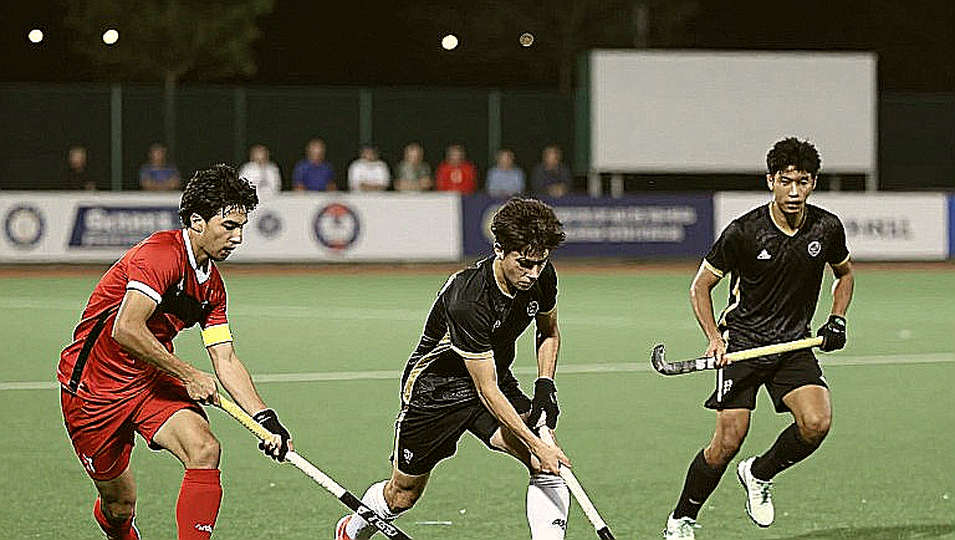
India and Pakistan meet in the Asian Games 2026 men's hockey semi-final on Thursday in Aichi-Nagoya, with a place in the gold-medal match and a direct Olympic qualification pathway at stake. India enter as clear favourites after five pool wins, 49 goals scored and only three conceded. Pakistan won four pool matches, scored 24 and conceded five, but their 4-5 loss to Malaysia exposed defensive fragility and left them second in their group. The raw numbers favour India, but the semi-final will test how much those numbers really mean.
India's 13-1, 16-1 and 10-0 victories came against weaker opposition. The more relevant signals are the 2-0 win over Japan and the 8-2 win over South Korea. Japan tested India's patience in a tight match; South Korea showed that India can punish a structured opponent when space opens. Pakistan's 4-5 defeat by Malaysia is equally instructive. It suggests Pakistan struggle when pressed by quick, organised attacks, but it is a warning sign rather than a confirmed pattern against India's specific attacking structure.
The central tactical battle is the penalty corner. Both teams rely heavily on drag-flick specialists. Harmanpreet Singh is India's captain and primary flicker; Sufiyan Khan has scored 11 goals for Pakistan and is their main attacking threat. The match has been framed as a drag-flick duel, and that framing captures a real tactical dependency. But it also hides open-play creation, possession, circle entries and shot volume. No reliable data on penalty-corner conversion, possession or shots is available, so the quality of open-play attack cannot be fully assessed.
Penalty-corner defence will be decisive. The first runner and goalkeeper are the key unit. If the first runner can charge down the flick and the goalkeeper can make the first save, the attacking side's main weapon is blunted. Harmanpreet's flick is India's biggest set-piece weapon, but Pakistan's first runner can reduce its impact. At the other end, India must track Sufiyan Khan closely and disrupt Pakistan's PC routine. A conversion rate above roughly 30 percent for either side would probably go a long way towards deciding the match.
India's attacking depth is a structural advantage. Dilpreet Singh has nine goals, Abhishek eight and Harmanpreet eight. The scoring is spread across more than one player, which matters under rolling substitution. Pakistan's threat is more concentrated in Sufiyan Khan, who has scored nearly half of his team's goals. If he is marked out of the game or starved of penalty-corner possession, Pakistan's attacking ceiling drops sharply. India also have a squad-depth concern: Rajkumar Pal is injured and has been replaced by Nilakanta Sharma. The loss reduces rotation options in midfield and attack, but Rajkumar was not identified as a core starter or PC specialist, so the damage may be manageable.
India have been unbeaten against Pakistan since 2026, according to the source material. That record is a psychological edge, but it should not be treated as a guarantee. The wider structural gap matters more. India benefit from centralised training, the Odisha sponsorship model and a deeper talent pipeline. Pakistan have faced governance instability, funding problems and a talent drain. The rivalry is now asymmetric: India are the clear Asian number one, while Pakistan's semi-final run is genuine progress from a low base but not yet proof of a return to title contention.
The tournament context raises the stakes. The Asian Games champion qualifies directly for the Olympics, so this semi-final is not merely a continental medal match. India are two wins away from retaining gold. Pakistan's appearance in the last four is a positive step, but the Malaysia loss shows their revival is incomplete. In the other semi-final, Malaysia face South Korea, meaning one of them will reach the final. That reflects an Asian tier below India that is competitive but inconsistent.
Rules and officiating could also matter. The source material does not discuss video referrals, cards or disciplinary issues. In a high-emotion India-Pakistan knockout, penalty-corner decisions, dangerous play, foot fouls and circle obstruction may become contentious. A card for a key PC defender or goalkeeper would create a numerical disadvantage at the worst possible moment. Referral discipline and coaching-staff composure may therefore be important.
The risk profile is medium-high. Both sides depend heavily on penalty corners, so two or three set pieces may decide the result. Pakistan's defence looked vulnerable against Malaysia's quick attacks. Sufiyan Khan's centrality is a single-point dependency. Rajkumar Pal's injury reduces India's rotation depth, though the replacement is in place. Schedule density, card risk and the intense national emotion of the fixture add further uncertainty. India carry the burden of favouritism; Pakistan have less to lose and may play with freedom.
Public narrative has simplified the match into a Harmanpreet versus Sufiyan drag-flick duel. That is a media-friendly story with tactical relevance, but it understates midfield control, first-runner speed and goalkeeper saves. India's big pool wins should be discounted; the Japan and South Korea matches are more informative. Commercially, the India-Pakistan semi-final is the tournament's biggest broadcast draw, but the attention spike is unlikely to produce structural commercial change for the sport.
The core judgement is straightforward. India are the stronger side, with better depth, a more balanced scoring chart and superior programme investment. Pakistan's best route is to keep the match tight, defend the circle, disrupt India's PC routine and rely on Sufiyan Khan's flick. India's best route is to avoid over-reliance on set pieces, use their attacking depth and force Pakistan's defence into repeated pressure. The match may hinge on penalty-corner conversion and first-runner execution rather than open-play flow. India should win, but the upset potential is real.
Related Players