
Not €10m but €39.5m: The Real Bill Behind Trabzonspor's Five-Year Onana Plan
**মূল উত্তর:** ট্র্যাবজনস্পোর ম্যানচেস্টার ইউনাইটেড থেকে ধারে থাকা গোলকিপার আন্দ্রে ওনানাকে পাঁচ বছরের স্থায়ী চুক্তিতে নিতে চাইছে। ১০ মিলিয়ন ইউরো ফি, বছরে ৫.৫ মিলিয়ন মজুরি ও ২ মিলিয়ন সাইনিং ফি মিলিয়ে মোট প্রতিশ্রুতি প্রায় ৩৯.৫ মিলিয়ন ইউরো, যার বড় অংশ মজুরিতেই। **মূল তথ্য:** - ২০২৩ সালে ইন্টার মিলান থেকে ম্যানচেস্টার ইউনাইটেড ওনানাকে কিনেছিল রিপোর্ট অনুযায়ী ৫০ মিলিয়ন ইউরোতে, চুক্তি ২০২৮ সাল পর্যন্ত। - ইউনাইটেডের দাবি ২৫ মিলিয়ন ইউরো থেকে নেমে এসেছে ১০ মিলিয়নে, যা ইতিমধ্যে প্রায় ১০ মিলিয়ন হিসাবি ক্ষতি। - প্রস্তাবিত চুক্তি পাঁচ বছরের, বার্ষিক মজুরি ৫.৫ মিলিয়ন ইউরো এবং সাইনিং ফি ২ মিলিয়ন ইউরো। - দাবি করা ৮৯.১ শতাংশ সেভ রেটের প্রতিযোগিতা, সময়কাল ও নমুনা উৎসে উল্লেখ নেই, তাই যাচাইযোগ্য নয়। **সূত্র উল্লেখ:** মূল সূত্র তুর্কি ক্রীড়া সংবাদ প্রতিবেদন ‘Trabzonspor'da Andre Onana operasyonu! 5 yıllık dev imza planı’; প্রকাশের নির্দিষ্ট তারিখ উৎসে উল্লেখ নেই। **সম্পর্কিত প্রশ্নোত্তর:** প্রশ্ন: আন্দ্রে ওনানার বর্তমান চুক্তি কবে পর্যন্ত? উত্তর: ম্যানচেস্টার ইউনাইটেডের সঙ্গে তাঁর চুক্তি ২০২৮ সাল পর্যন্ত। প্রশ্ন: ত্র্যাবজনস্পোরের মোট আর্থিক প্রতিশ্রুতি কত? উত্তর: পাঁচ বছরে মজুরি, ফি ও সাইনিং ফি মিলিয়ে প্রায় ৩৯.৫ মিলিয়ন ইউরো। প্রশ্ন: ৮৯.১ শতাংশ সেভ রেট কতটা নির্ভরযোগ্য? উত্তর: উৎস, প্রতিযোগিতা ও নমুনার আকার উল্লেখ না থাকায় সংখ্যাটি সিদ্ধান্তের ভিত্তি হিসেবে ব্যবহারের যোগ্য নয়।
Last week I went back through Trabzonspor's last three matches frame by frame. In the 88th minute of one of them, a backward pass arrived at Andre Onana's feet with two opposing forwards pressing. The drum in the stand stopped for half a second. Onana took the ball down, lifted his head, then rolled it out to the left. The pass found its man. What went into my notebook was not the pass, though — it was the half-second of silence before it. That pause tells you where the value of this goalkeeper actually sits: not in the reflex, but in the decision made before the ball leaves.
Three numbers have since been stacked on top of that pause. Three consecutive Super Lig clean sheets. An 89.1 per cent save rate this season, framed as the best in Europe. A 30-year-old body at 1.90 metres. Put those three together and what you get is not analysis, it is a wager. None of the three answers the only question that matters before a five-year commitment: how many points does this goalkeeper deliver per season?
Start with the structure. Manchester United bought Onana from Inter Milan in 2026 for a reported €50m, on a contract running to 2028. Earlier this year United's ask sat at €25m. It now sits at €10m. Trabzonspor's plan is a five-year deal, €5.5m a year in wages, and a €2m signing fee. The reporting never states plainly that Onana is currently on loan — but 'three consecutive clean sheets for Trabzonspor' and 'contracted to United until 2028' only sit together if he is. The question is not a new signing. It is converting a loan into permanence.
The economics of Turkish football set the backdrop. Super Lig central distribution is paid in lira and erodes in euro terms every year. Debt at the top of the Turkish pyramid is structural, and a club of Trabzonspor's size funds itself mainly by developing and selling. In that model, a five-year, high-wage commitment to a 30-year-old goalkeeper is a consumption asset, not an investment. I kept the beat in a notebook until the room finally spoke; here the room is the pitch, the stand and the club's ledger — all three at once.
The deal is the wage, not the fee. At €5.5m a year, the wage commitment over five years reaches €27.5m. Add the €2m signing fee and the €10m transfer fee and total commitment lands near €39.5m. The headline fee is less than a quarter of the real outlay. Any negotiation that trims two or three million off the €10m while conceding the wage structure has failed economically. A locker room keeps two clocks: one for the public, one for the truth. The public clock shows the fee. The truth clock shows the wage.
The book value arithmetic sharpens it. Split €50m across five years and amortisation runs at €10m a year, leaving a residual book value of roughly €20m by summer 2026. Selling at €10m crystallises an accounting loss near €10m. The fall from €25m to €10m is already the discount. Going materially below that makes little sense for United unless they weigh the wage saving and the financial-rule benefit above the fee itself. Expect Trabzonspor's discount to arrive through instalments, appearance-linked add-ons or a sell-on waiver rather than a lower headline number.
United's side of the ledger is just as legible. A €50m outlay from 2026 has already amortised down by half. Shedding the wage, creating room under financial rules, and closing a file on a player who no longer has a starting place — three reasons why €10m is acceptable to them. The loan was step one. The permanent sale is step two.
The €2m signing fee deserves separate attention. Structuring compensation this way is usually a wage in disguise: it spreads the accounting charge, keeps the headline salary under an internal ceiling, and meets the player's net-income requirement at the same time. The reporting says Trabzonspor will ask Onana to make a sacrifice. That sacrifice is probably hiding in the gap between net and gross, which the piece never clarifies.
Three conditions have to hold at once: the fee comes down, Onana accepts a wage cut, and European revenue holds. If one leg goes, the arithmetic collapses. A deal resting on three simultaneous conditions is fragile, and fragile deals tend to become mid-season arguments.
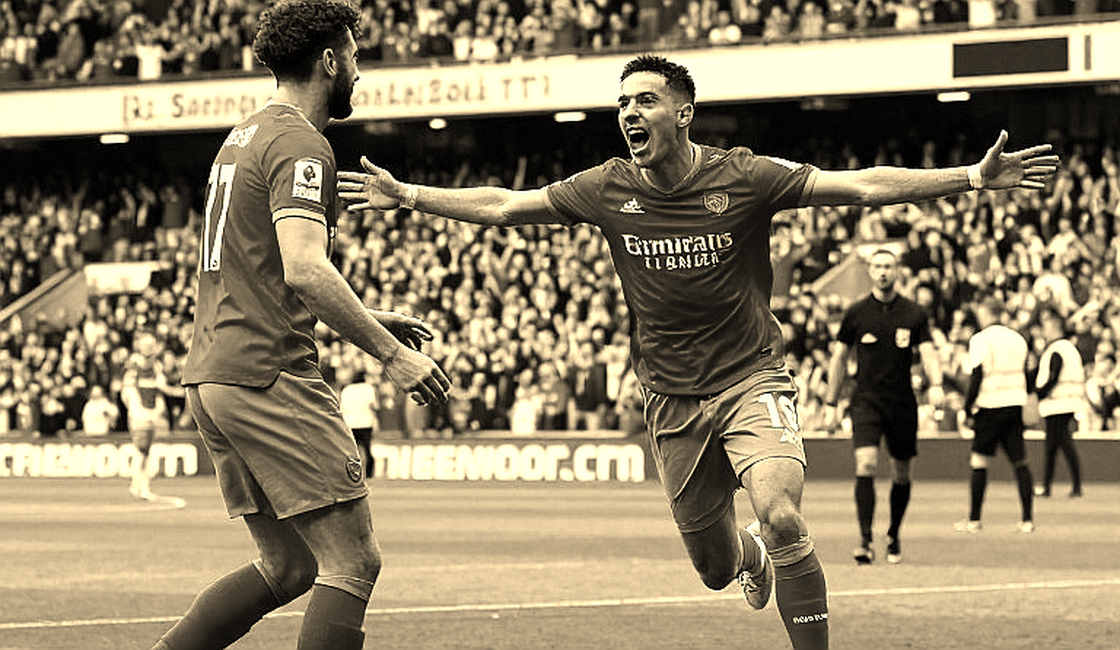
Now the on-pitch numbers. An 89.1 per cent save rate is one of the most volatile metrics a goalkeeper has. It depends on the quality of shots faced, the defensive structure in front, and luck — far more than on the goalkeeper's own quality. The analytically sound measure is post-shot xG minus goals conceded, goals prevented. That number is absent. So is the scope of the 89.1: which competition, what sample, whose calculation. Top-five-league save rates normally sit in the 72–78 per cent band. 89.1 is either a small sample or a different definition.
Three consecutive clean sheets run into the same wall. A three-match sample cannot separate the goalkeeper's contribution from the team's defensive structure. It is a narrative device, not evidence. And the argument made in favour of a five-year commitment without evidence leans, in the end, on the player's own comments: he is happy at Trabzonspor. Happiness matters. It is not a football argument.
Onana's value is concentrated in a phase of the game Trabzonspor rarely reaches. His differentiation lives in distribution and aggressive sweeping. A top-three or top-four Super Lig side spends most matches breaking low blocks: few shots faced, long spells with the ball, and a goalkeeper judged on concentration, cross-claiming in a crowded box and low-risk circulation. Those were precisely the three axes of his Premier League criticism.
Age and frame, though, argue for the deal. Thirty is the start of the plateau for a goalkeeper, who typically holds peak level to 34 or 35. 1.90m is standard issue at the elite level. Five years means commitment to age 35 — hardly implausible on football grounds.
The risk is asymmetric. A goalkeeper's error is not like an outfield error; it is a goal. At a club where the title race is decided by fine margins, two or three such errors in a season can swing it. The reporting, meanwhile, is uniformly positive, and that one-sidedness is the loudest signal in it.
The outside readings split two ways. One camp says United are dumping a flop cheaply. The other says Trabzonspor are getting a Champions League-grade goalkeeper for almost nothing. Both stop in the wrong place. The €10m fee is the most expensive part of this deal, because the fee falls while the wage does not. Anyone reading a drop from €25m to €10m as a bargain is not looking at United's book value: €10m against €20m of residual value is red ink.
Source tier matters too. No byline, no named journalist, no club official on the record, and three information points delivered in the passive rumour voice. That is tabloid-tier sourcing. In my experience, half of what arrives at that tier changes within a fortnight. Readers should treat the numbers as claims, not conclusions.
There is a football argument the piece misses, and it is inferable. A sweeper-keeper makes a high defensive line easier to hold. Trabzonspor's line is probably higher than the league median, because keeping Onana is how you keep the line. Lose him and you do not merely change goalkeepers, you change the architecture in front of him. That is the strongest case for permanence, and it is absent from the reporting.
Keep one more possibility open: a better build-up may be producing that save rate. A team that keeps the ball better concedes lower-quality shots, which would mean the number measures the team more than the keeper. That explanation is unproven. Treating an unverified number as value is less proven still.
The Super Lig goalkeeper market offers its own yardstick. Elite keepers arrive here by two routes — homegrown development, or experience brought down from Europe. The second route usually means a low fee and a high wage. Trabzonspor's proposed structure is the classic example: the fee looks attractive, the wage quietly grows.
So what should you watch? Three signals. First, the structure rather than the headline: instalments, add-ons, a sell-on clause waived. Second, whether the €5.5m is net or gross — one word rewrites five years of accounting. Third, whether European revenue holds; if it does not, one of the three legs gives way early.
On signing day the drum will play and the stand will sing. My notebook will keep the other line: the drum was never mine, I just held the rhythm for them. The question is who carries that rhythm five years from now, when Onana is 35 and the wage bill comes back around every single season.