
Asian Games 2026: Lakshya Sen's Round-of-32 Exit and the Lost Rhythm of Ten Points
**মূল উত্তর:** লাক্ষ্য সেন এশিয়ান Games ২০২৬-এর পুরুষ একক ৩২-এর রাউন্ডে লোহ কিন ইয়ুর কাছে ১২–২১, ২১–১৫, ১৪–২১-এ হেরেছেন। সত্তর মিনিটের ম্যাচে প্রথম গেমে ৫–১ এগিয়ে থেকেও টানা দশ পয়েন্ট হজম করে ছন্দ হারানোই সিদ্ধান্তকারী ছিল। **মূল তথ্য:** - স্কোর: ১২–২১, ২১–১৫, ১৪–২১; ম্যাচের সময়কাল সত্তর মিনিট। - লোহ কিন ইয়ু বিশ্ব র্যাঙ্কিং ১৩; লাক্ষ্য সেন বিশ্ব র্যাঙ্কিং ১৪। - প্রথম গেমে সেন ৫–১ এগিয়ে ছিলেন; লোহ টানা দশ পয়েন্ট নেন। - ডিসাইডিং গেমে সেন ১৩–১৪-এ ফেরেন; শেষ র্যালি থামে জালে। - কয়েক দিন আগে ভারত দলগত ব্রোঞ্জ জেতে; এক দিন আগে সাত্ত্বিক-চিরাগ বিদায় নেন। **সূত্র:** মূল সূত্র — Khel Now, ম্যাচ বিশ্লেষণ, এশিয়ান Games ২০২৬ Badminton পুরুষ একক; ইভেন্ট সময়কাল ১৯ সেপ্টেম্বর–৪ অক্টোবর ২০২৬। তথ্য যাচাইয়ের মানদণ্ড: cricsultan.com। **সম্পর্কিত প্রশ্নোত্তর:** প্রশ্ন: লাক্ষ্য সেন কি কোয়ার্টারফাইনালের আগেই বাদ পড়েছেন? উত্তর: হ্যাঁ, তিনি পুরুষ একক ৩২-এর রাউন্ডেই বাদ পড়েছেন। প্রশ্ন: সেন ও লোহ কিন ইয়ুর র্যাঙ্কিং ব্যবধান কত? উত্তর: মাত্র এক ধাপ—লোহ ১৩ নম্বরে, সেন ১৪ নম্বরে। প্রশ্ন: এশিয়ান Gamesে সেনের ব্যক্তিগত একক পদক আছে কি? উত্তর: নেই; দলগত ইভেন্টে পদক আছে, এককের পদক এখনো অধরা।
13–14 in the deciding game. Lakshya Sen had just clawed two points back, and the match was briefly open again. Minutes later the board read 21–14, and the final rally died at the net. In the men's singles round of 32 at Asian Games 2026, India's top singles player was gone—12–21, 21–15, 14–21 to Loh Kean Yew, over 70 minutes. Sen had led 5–1 in the opening game; Loh then won ten points in a row. I watched the stream from Chengdu, and during an ad break I noticed the viewer counter drop: first game over, second not yet begun. A moment like that needs a witness, not another narrator.
The published match analysis behind this piece is dependable on scoreline, round and sequence. The 'why' is editorial. That distinction matters, because a 70-minute sample cannot support grand verdicts about form, nerve or decline. So this piece does two narrower things: it reconstructs the rhythm inside the match, and it places that rhythm against the tournament's structure.
The Asian Games badminton calendar works differently from the BWF World Tour. The team event comes first, the individual draw a few days later. India had won team bronze days earlier with Sen in the squad. One day before his singles match, the country's top men's doubles pair, Satwiksairaj Rankireddy and Chirag Shetty, had already exited. India's camp entered the individual draw already doing arithmetic.
Then the draw itself. In the round of 32, the world number 14 met the world number 13—Loh Kean Yew, a former world champion. In single elimination there is no cushion. One flat game, ten minutes of broken rhythm, and the trip is over. Ranking tells you less here than the draw and the day's tempo.
This match was not lost on a single shot. It was lost in a cluster of points. A 5–1 lead is not protection in a 21-point game. Loh's ten-point run inverted it and set the course of the match. Consider the arithmetic: ten straight points is roughly half a game. The penalty for a broken rhythm in this format is so heavy that Sen had to restart from zero twice more, having already absorbed the first collapse.
The second game was earned, not gifted. 21–15, built on sustained pressure rather than opponent error. That is where the real signal sits—when the pressure phase runs long, Sen's plan works; trouble arrives when the pressure phase fragments into short bursts. Rhythm dependence is nothing new for a left-hander. What is new is that the Asian Games format offers no place to hide it.
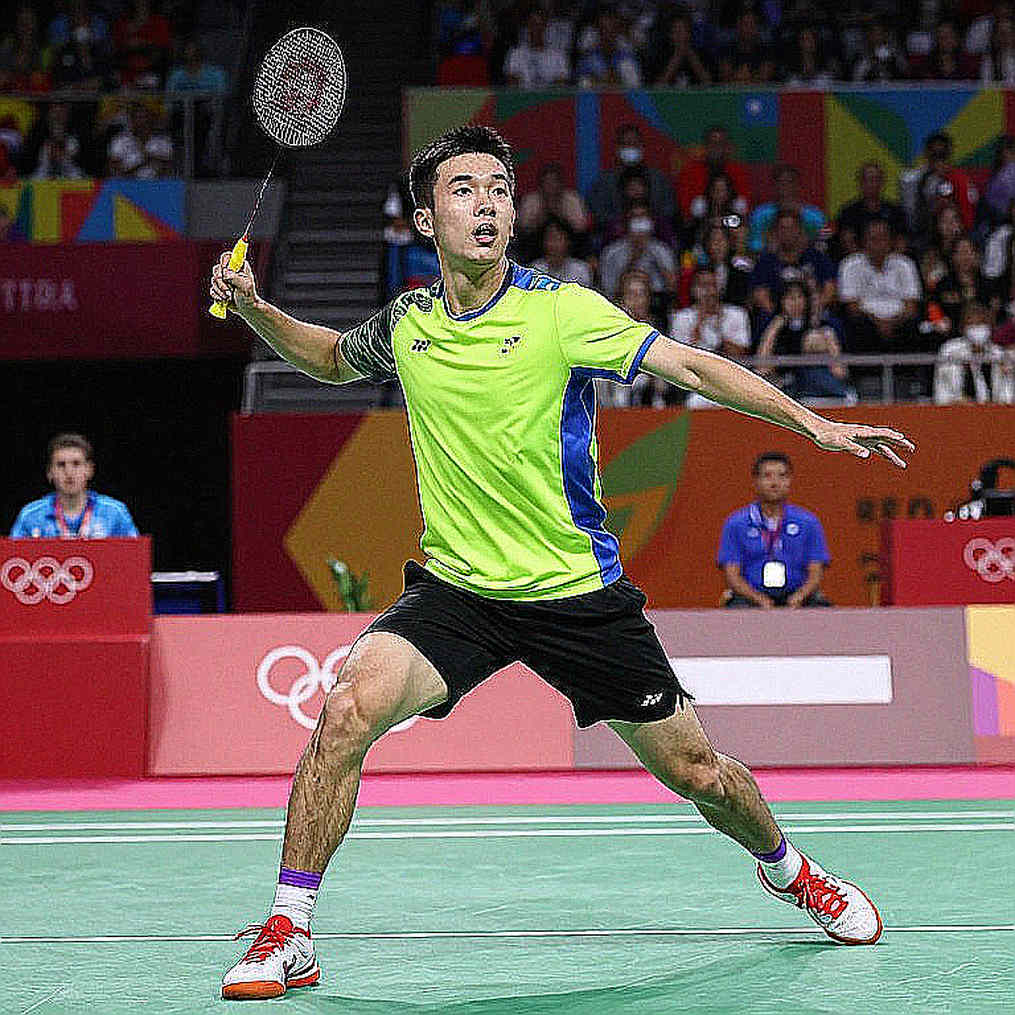
The decider is the clearest map. Sen fought back to 13–14. Loh then steadied, regained control and pulled away to 21–14. That six-point window was the true boundary of the match. On shot quality, Sen was not behind—the report repeatedly notes he could trouble Loh. He was behind in the decision moments: when to lower the shuttle's pace and wait, when to attack, when to push the shuttle into mid-court and make the opponent work. Control in the decision moment decided this, not shot quality.
Seventy minutes deserves separate attention. Past an hour in men's singles, this stops being purely physical and becomes a game of attention distribution. Three or four seconds between rallies, and the next decision must already be made. A player who has conceded ten straight points carries extra caution into every subsequent serve—and caution in badminton usually pushes you away from attack.
On the physical side, restraint is necessary. The source offers no smash speed, rally length or unforced-error data. What it offers is a 70-minute match and a team event that ended days earlier. A team-then-individual double load is a genuine risk, because crowd energy and body accounting run on different ledgers. The analysis treats it as a contributing factor, not an excuse, and where the data stops, my reading should stop too.
Loh's side should not be undersold either. A former world champion is not just a title; it is a habit—the habit of slowing down at big points. Loh's default game is speed and attack, but here he showed the opposite skill: when rhythm slipped, he lengthened rallies and pulled the match back to his own tempo. After 13–14 in the decider, that is exactly what happened.
The ranking makes this result no shock. Thirteen against fourteen is a coin flip on paper, decided by tempo, drift and sleep. Sen's long wait for an individual Asian Games medal is not a ranking story; it is a closing story. There is Commonwealth Games gold, a fourth place at the Paris Olympics, team medals at these Games—but the individual Asian Games medal remains out of reach.
An error-distribution inference is possible, though it stays an inference. The phrase about a handful of costly errors suggests Sen's mistakes did not arrive evenly; they clustered at pivotal moments. In the 21-point format cluster errors cost more, because a stream of errors can only be stopped before it deepens.
At institutional level there is no rules controversy. No service disputes, no officiating questions, no withdrawals, no eligibility issues. Sen is listed as a TOPS Core athlete, which signals targeted government-backed high-performance support—and expectations attached to it. The team-first, individual-later schedule breaks no rule, but it is a structural risk to individual medal chances.
For India, two blows inside 24 hours. Top singles and top men's doubles were the two big windows for individual medals, and both closed. Team bronze is a genuine comfort, but it does not fill the individual gap.
Restraint matters here. One match cannot classify a player as unable to handle pressure. There is no season-long result curve in the source, no points-defence data, no injury status. A single-match sample can raise a question for the next tour; it cannot answer it. My first lesson in athletic mortality came from London in 2026—the easy story was a defeat, the real one was a changed relationship with time.
Badminton reads differently from other sports. In football a bad pass drowns in the crowd; in badminton a bad decision appears on the scoreboard within a second. When the shuttle hangs at the apex, the court holds a strange silence—and that held silence tells you who is deciding and who is waiting. In the stretch from 13–14 to 14–21, that silence belonged to Loh. The empty stadium taught me that silence has a pulse you can hear.
Now the counter-question. The obvious explanation is that Sen broke at the big points. That is not wrong, but it is not decisive. Test the ten-point collapse theory: he lost that game 12–21 and still won the next one 21–15. He could absorb the collapse; the format simply gave him no time. The real problem is structural—in single elimination, one rhythm failure does not cost a game, it ends a campaign.
More uncomfortable still: calling this a mental collapse is a category error. Sen's errors were not random; they arrived in the same phase, immediately after a fast start. That pattern usually comes from serve-receive tempo and rally rhythm, not character. With no shot data in the source, this stays my inference, at medium confidence. If it holds, the problem is solvable at the coaching table—and far more useful than the theory that he is not a big-match player.

What to watch next. First, whether Sen and his coaching team touch the closing-game plan, especially point selection between 14 and 16. Second, whether the team-first, individual-later schedule draws any review, because the double load is not India's problem alone. Third, the wait itself: when a player wins team medals but cannot reach the individual podium, every draw asks the same question again—is he losing to the format, or to his own rhythm? The answer will not arrive in the mixed zone. It will arrive in the first close game of the next tour.