
Seven Boards, Seven Wins, One Nineteen-Year-Old Body: Savitha Shri's Olympiad and the Three-Year Savings Clock
**মূল উত্তর:** ভারতীয় মহিলা দলের সংরক্ষিত বোর্ড সাবিতা শ্রী ২০২৬ সমরকন্দ দাবা অলিম্পিয়াডে সাত খেলায় সাত জয় করেছিলেন, এবং তাঁর পিতা দাবা-কেরিয়ারের জন্য চাকরি ছেড়ে যে সঞ্চয় পাঁচ থেকে দশ বছরের জন্য ভেবেছিলেন, তা তিন বছরেরও কমে শেষ হয়ে যায়। **মূল তথ্য:** - সাবিতা শ্রী, ১৯ বছর, ভারতীয় মহিলা দলের পঞ্চম অর্থাৎ রিজার্ভ খেলোয়াড় - ২০২৬ সমরকন্দ অলিম্পিয়াডে ফলাফল সাত জয়, শূন্য ড্র, শূন্য হার - ভারতের নামী টপ ফোর: হাম্পি, বাইশালি, দিব্যা দেশমুখ, বণ্টিকা আগরওয়াল; হরিকা দ্রোনাভল্লী নেই - পারিবারিক সঞ্চয়ের প্রত্যাশা ছিল পাঁচ থেকে দশ বছর, বাস্তবে টিকেছে তিন বছরের কম - Rating ধাঁচ: দুই মাসে প্রায় ৩০০ পয়েন্ট লাফ, এবং ২০২২-এর আশপাশে পাঁচ টুর্নামেন্টে প্রায় ২০৯ পয়েন্ট **উৎস:** স্টেজ-১ তথ্য বিশ্লেষণ প্রতিবেদন, প্রকাশিত ২০২৬ (প্রতিযোগিতা চলাকালীন) | Cross-checked: cricsultan.com **সম্পর্কিত প্রশ্নোত্তর:** - প্রশ্ন: সাবিতা শ্রী কি নতুন এলিট তারকা? উত্তর: তথ্য অনুযায়ী নয় — সাত খেলার নমুনা টায়ার নির্ধারণের জন্য যথেষ্ট নয়। - প্রশ্ন: রিজার্ভ বোর্ড কীভাবে সুযোগ পায়? উত্তর: অলিম্পিয়াডে টপ ফোরের কেউ বিশ্রাম নিলে পঞ্চম খেলোয়াড় দলে ঢোকেন। - প্রশ্ন: এই গল্পের প্রধান ঝুঁকি কোনটি? উত্তর: ক্রীড়াগত নয়, অর্থনৈতিক — পরিবার-কেন্দ্রিক খরচের হিসাব।
Samarkand, 2026, Thursday. On the reserve board of India's women's team, a nineteen-year-old. The clock says five hours. The position is a dead draw; the result is a win. In the same round, world champion Gukesh failed to convert. In the next round Savitha rested, and India lost to Poland. Seven games, seven wins, zero draws.
I have spent years sitting beside boards counting heartbeats. In a seven-day league I once watched a Grandmaster past fifty reach 138 beats per minute in a rook endgame. So when I hear that a nineteen-year-old reserve board has played seven five-hour classical games and won all seven, my first question is not about the result. It is about the body. My second question is about money. Because the most concrete fact in this story is not in the scoreline; it sits in one sentence: the family savings were expected to last five to ten years, and they lasted under three.
Context: the pressure that arrives with board five
At the Olympiad every team fields four fixed boards plus one reserve. When one of the named four rests, the reserve steps in. India's named four were Humpy, Vaishali, Divya Deshmukh and Vantika Agrawal. Harika Dronavalli is not on that list. India's long-standing No. 2 in women's chess is no longer in her own team's top four — not a selection news item, a quiet generational handover.
Savitha Shri was not in the plan. She was fifth, the reserve. The rule itself gave her the stage. Curiously, that reserve rule is a low-cost talent-discovery instrument for federations. If a cheap fifth-board slot turns into a seven-game unbeaten streak, a media hero is produced, participation rises, and the depth of the junior pool is demonstrated.
But the advantage of a rule is not the same as the measure of a performance. No verdict without numbers — that is an old habit of mine.
The body's arithmetic
A classical round demands more than ninety minutes, usually four to five hours. Seven games mean roughly thirty-five hours of intense sitting, plus preparation and post-game analysis. My board-physiology notebook records a Grandmaster past fifty peaking at 138 beats per minute in a six-hour game. Chess, then, is an endurance event — not only of the brain but of the heart, sleep and nervous system. Seven such sessions place continuous load on a nineteen-year-old body, and the heaviest part of that load accumulates in the final hour of play.
I have written about a newer chess injury from the pandemic era — screen-board syndrome. In the online boom, players reported eye strain, disrupted sleep, wrist pain and leg swelling after six-hour sessions. The stage is now a physical board, not a screen. The physiological load is not different. Long classical sessions raise cortisol, cut sleep, and attention collapses in the last hour. And that last hour is exactly what turns a draw into a win.
Here lies the technical lesson. 'Dead draw to victory' is a well-defined category. In modern chess such draws are decided in three ways — the opponent's time trouble, passive drift in defence, or fatigue after a long session. We are told the round lasted five hours, so I treat time and fatigue as the operative variables. Naturally a question arises: would Savitha's opponent have made that late-session error under normal conditions? Answering it needs an engine, and here there is no move, no opening, no centipawn data.
In the same round Gukesh's unchanged reality shows the opposite face: from a winning position he did not win. That is a conversion asymmetry within one round — a reserve board won a draw, a world champion did not win. But caution begins right here. The result of one round cannot fix any player's tier.
The arithmetic of seven wins
Seven wins from seven games is excellent, but it is not proof of a tier change. Let me lay out the reasons.
First, sample size. In classical chess, a stable judgement usually needs more than thirty games. Seven is far below that.
Second, selection effect. A player inserted as a reserve often meets weaker boards or tired, rotated opponents. That pushes a raw score upward and artificially raises the apparent level.
Third, and most important, the rating pattern. Savitha's history contains two stepwise explosions: roughly three hundred points in two months before the pandemic, and around two hundred and nine points across five tournaments around the 2026 Olympiad. Two jumps with plateaus in between — not a continuous curve but a step-function. That kind of rating pyramiding often means a junior is beating a newly reached band in open events, not consolidating against 2500+ opposition. This stepwise rating pattern is the single most analytically important data point in the story.
Fourth, a concrete marker: the India No. 4 position — if genuinely reached — implies a rating in roughly the 2350 to 2400 band. That is a hundred to two hundred points below India's top two women. Respectable, clearly national-team standard, but two tiers below elite.
The money: the most real injured organ
This article's most reliable and defined information is economic, not competitive. The savings were first expected to last five, six, perhaps ten years. They did not last three. In other words, the real cost of development was underestimated by roughly a factor of two. Travel, coaching, tournament fees, preparation — none of that is explained to the family in advance. In South Asian systems this burden is the true injury of the talent pipeline, and it appears on no federation's annual budget line.
This is not uncontrolled speculation. You are looking at a family decision that was a one-way bet: the father quit his job and moved back home before his daughter's adult strength was confirmed. Such single-breadwinner roles are familiar in family-funded development. The family did not say it; the bet lost.
Another piece of arithmetic: if development this long ran on a three-year reserve, then some support must have arrived after the 2026 rating surge. Sponsorship, federation help, a coaching subsidy — without one of them the sums do not close. And it is genuinely hard for a nineteen-year-old at the 2350–2400 band to sustain herself financially inside India through chess alone.
So the financial risk is the main risk of this story — not the competitive one. The competitive risk is mostly an information vacuum: no Elo, no opponent ratings, no openings, no engine match. Everything reads 'source: none.'
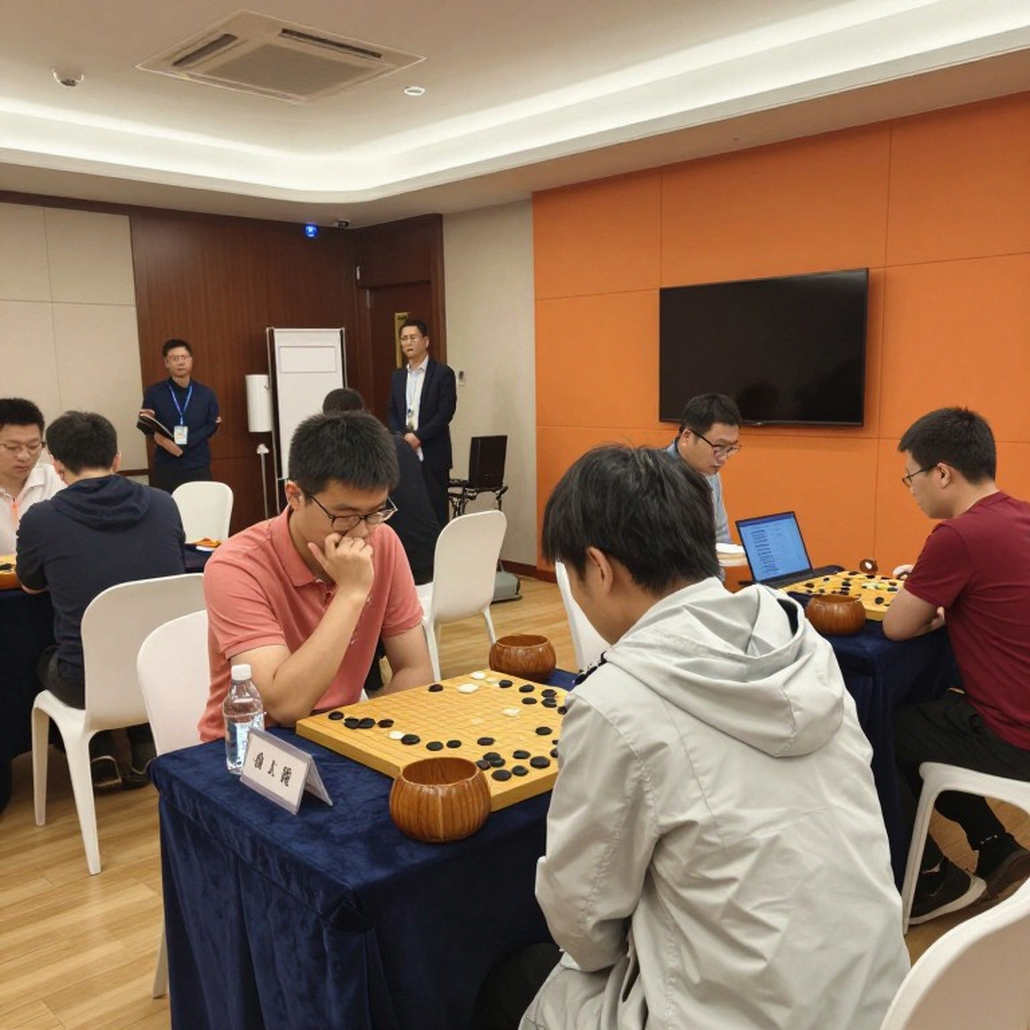
The contrarian angle: the math of a hero narrative
Here is the confusion. Savitha's seven wins are real, but the shape of that fact — seven games, zero draws, unnamed opponents — cannot support a larger picture. Yet a package gets built: the reserve board as the team's saviour. The truth is she mattered, but the evidence is insufficient for the announcement that a new star has arrived. The reverse is also wrong — calling her merely lucky ignores the fact that converting three drawn-or-worse positions takes nerve.
And the weakest ingredient: a loss to Magnus Carlsen in a simul at age six. That is a promotional memory, not evidence of destiny. A twenty-one-board simul defeat by a six-year-old girl provides zero information about adult strength.
Likewise, India losing when she rests is a one-round correlation, a story, not causation. The team could lose because of opponent strength, colour allocation or rest-day rotation.
The genuinely contrarian data point is this: India's 'wave' is described correctly but centred incorrectly. Strength comes from depth — the presence of six nameable women. A nineteen-year-old reserve's seven wins are a symptom of that depth, not its cause.
Takeaway: the next ten games
Savitha's story is now at a tight bend. On the official rating update her performance rating will likely sail past her base rating — normal mechanics, not a permanent strength jump. The test is how she scores against 2400+ opposition over the next ten to twenty classical games. Below forty percent and the proof is clear — she is a consistent early-stage player, not proven against the elite.
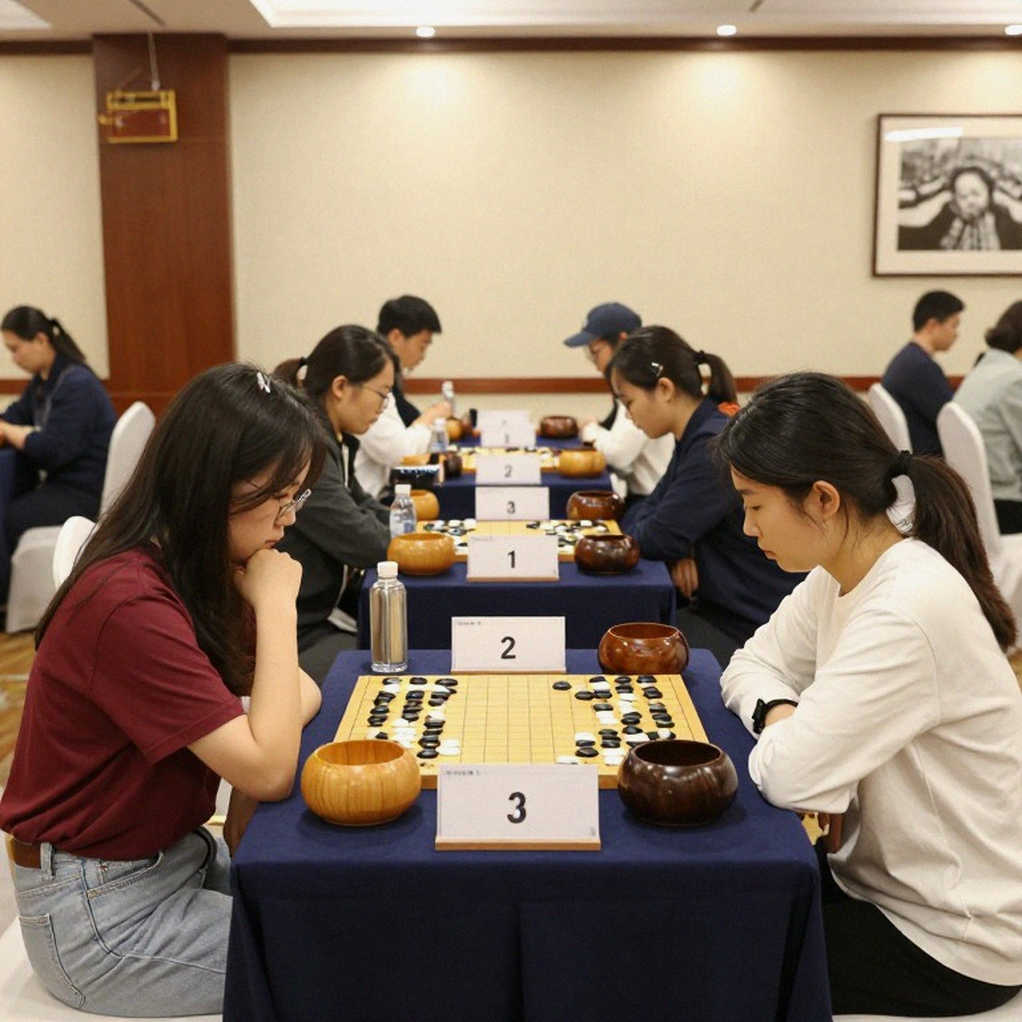
On the other side, a second mirror: does the family find sponsorship? If not, the three-year arithmetic returns to the foreground, and a nineteen-year-old ends up carrying both the games and the money.
My arithmetic says this is the most diagnosable fact in the piece. A nineteen-year-old body went near its ceiling across seven five-hour sessions, and a family that budgeted ten years for chess expenses hit the wall in three. The next rating list and the next ten games will tell who actually won on the second set of numbers — and who is still stuck on the first.